Personal Fall Arrest Systems

  • Home
  • Personal Fall Arrest Systems
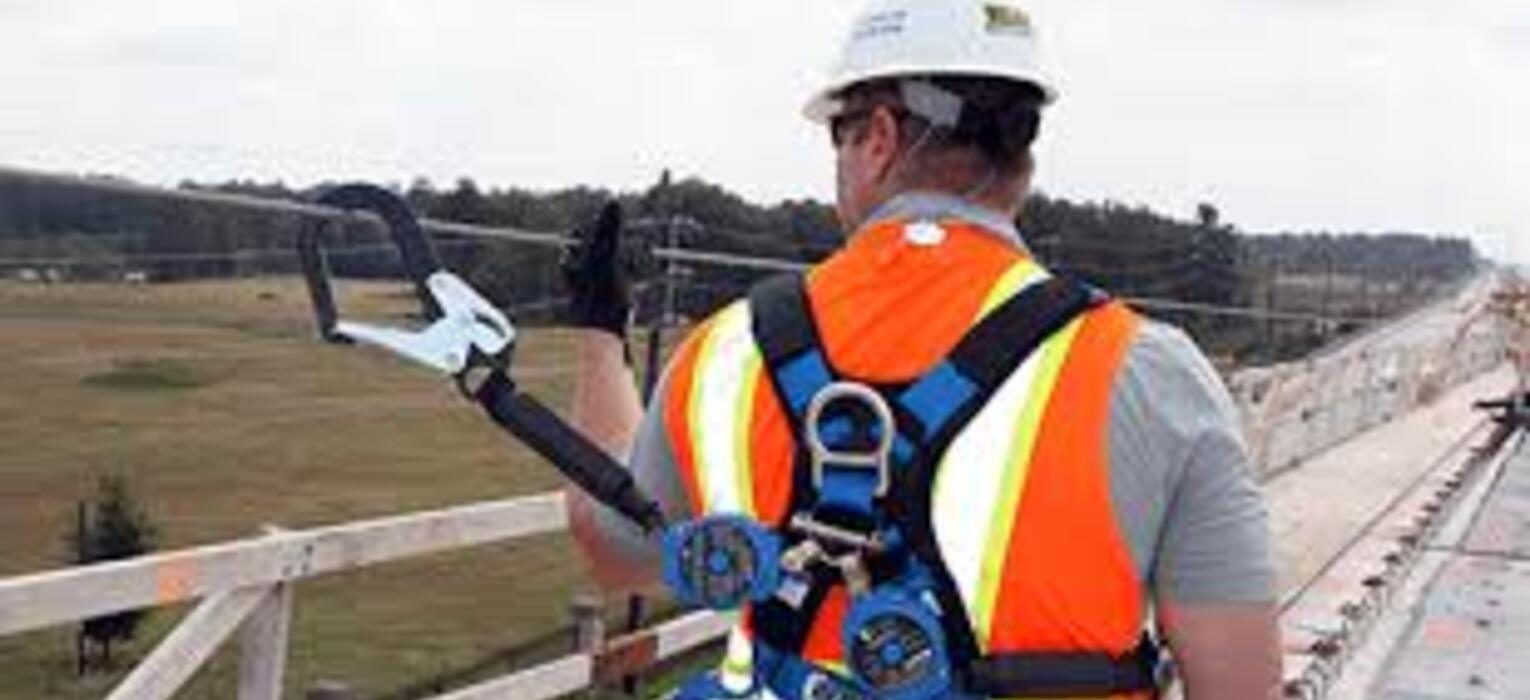
Worker in safety harness demonstrating personal fall arrest system (PFAS) on elevated work site, emphasizing fall protection training and safety compliance.
Personal Fall Arrest Systems | Safety Is A Mindset
Fall Protection OSHA 1926.502 / 1910.140 ANSI Z359
Fall Protection · Safety Is A Mindset

Personal
Fall Arrest Systems.

A Personal Fall Arrest System (PFAS) is the last line of defense between a worker and a fatal fall. At Safety Is A Mindset, we believe the equipment alone is never enough — it's the trained behavior, disciplined inspection habits, and ingrained safety culture that make PFAS genuinely life-saving.

System Anatomy

The Three Core Components of Every PFAS

Every personal fall arrest system is built on three interdependent components. Remove or compromise any one of them and the system fails. Safety Is A Mindset trains workers to understand each component — not just wear it.

Anchorage & Anchor Connector

The anchor is the system's fixed point — it must withstand at least 5,000 lbs per attached worker, or be part of a certified system with a safety factor of two. Anchor connectors include D-rings, snap hooks, and carabiners that attach the body harness to the anchor point. Never use anchor points not rated for fall arrest.

→ Structural Foundation

Full-Body Harness

The full-body harness distributes fall-arrest forces across the thighs, pelvis, chest, and shoulders — never the waist alone (body belts are prohibited for fall arrest). It must fit the worker correctly: straps snug but not restrictive, D-ring centered between shoulder blades, buckles fully engaged. An ill-fitting harness is a false sense of security.

→ Human Interface Layer

Self-Retracting Lanyard (SRL)

Automatically retracts to eliminate slack, activating instantly upon a fall. Allows greater mobility than fixed lanyards and limits free-fall distance significantly.

→ Connecting Element

Shock-Absorbing Lanyard

Contains a tear-webbing pack that deploys on fall, reducing arrest forces to below 1,800 lbs. Max free fall of 6 ft — always calculate total fall clearance.

→ Energy Absorption

Positioning Lanyard

Allows workers to be supported hands-free on vertical surfaces. Not rated for fall arrest — must be used in tandem with a properly rated fall arrest lanyard.

→ Work Positioning

Before Every Shift

The Pre-Use Inspection Checklist

OSHA requires that PFAS equipment be inspected before each use by a competent person. At Safety Is A Mindset, we treat this not as a compliance checkbox — but as a behavioral habit that every worker owns. This takes 90 seconds. A fall takes less.

01
Webbing & Stitching Integrity
Run fingers along all webbing. Look and feel for cuts, abrasions, burns, chemical discoloration, or stiffness. Check stitching for breaks or loose threads.
Retire if damaged
02
Hardware — Buckles, D-Rings, Snaps
Check all metal hardware for corrosion, distortion, sharp edges, or cracks. Test all self-locking snaps and carabiners for gate function and locking engagement.
Retire if damaged
03
Shock Absorber Pack Indicator
Check that the shock-absorber deployment indicator is intact. A deployed indicator means the lanyard has been subjected to fall forces and must be immediately removed from service.
Retire if deployed
04
SRL Housing & Retraction Function
Pull out approximately 12 inches of lifeline and release — it must retract smoothly and lock when pulled sharply. Check housing for cracks or impact damage.
Inspect monthly + pre-use
05
Harness Fit & Adjustment
Don the harness, tighten all straps, connect all buckles. The back D-ring must sit between shoulder blades. Leg straps should admit one flat hand — no more, no less.
Every donning
06
Anchor Point Verification
Confirm anchor point meets structural load requirements. Identify location relative to work area — anchor must be at or above the dorsal D-ring. Calculate total fall clearance before work begins.
Document verification
07
Manufacturer Labels & Date Tags
Confirm all labels are legible — manufacturer name, model, applicable standards (ANSI/CSA), manufacture date. Equipment without readable ID labels must be removed from service.
Record in log

Critical — Often Overlooked

The Rescue Plan: Required Before You Climb

OSHA mandates that employers have a rescue plan before any worker is exposed to a fall hazard. Suspension trauma — harness hang syndrome — can be fatal within minutes of arrest. A plan on paper means nothing unless every person on the crew knows their role.

Designate Rescue Roles

Every job site must have a designated rescue coordinator before elevated work begins. This person knows the rescue method, has the equipment, and is trained to use it — before they are ever needed.

Select Rescue Method

Self-rescue, assisted rescue, or emergency services — the method depends on height, access, and site conditions. Each scenario requires specific equipment and training. Never rely on a single method.

Call for Help Immediately

The moment a fall is arrested, the clock starts. Suspension trauma begins within minutes. Call emergency services immediately — do not wait to assess whether it looks serious.

Relieve Suspension Forces

If the worker is conscious, instruct them to use suspension trauma straps (foot loops) to pump their legs. This slows venous pooling. Get them to a horizontal position within minutes of rescue.

Medical Evaluation Required

All workers who have arrested a fall must receive medical evaluation — even if they feel fine. Suspension trauma, shock, and internal injury can present with delayed symptoms.

Remove Equipment from Service

Any PFAS component involved in arresting a fall must be removed from service immediately and quarantined. Do not inspect and reuse. The forces involved permanently compromise the system.

Regulatory Reference

OSHA PFAS Compliance at a Glance

RequirementSpecificationStandardStatus
Fall Protection Trigger Height — Construction6 feet above lower level29 CFR 1926.502Required
Fall Protection Trigger Height — General Industry4 feet above lower level29 CFR 1910.140Required
Anchor Point Minimum Load5,000 lbs per attached worker1926.502(d)(15)Critical
Maximum Arrest Force on Worker1,800 lbs with shock absorber1926.502(d)(16)(ii)Critical
Maximum Free-Fall Distance6 feet or to lower level1926.502(d)(16)(iii)Required
Deceleration DistanceMaximum 3.5 feet1926.502(d)(16)(iv)Required
Harness D-Ring PositionCenter of wearer's back, near shoulder level1926.502(d)(17)Required
Competent Person InspectionBefore each use, following any fall event1926.502(d)(21)Required
Rescue PlanMust exist before any worker is exposed1926.502(d)(20)Critical
ANSI Z359 Standards ComplianceAll PFAS equipment to meet ANSI/ASSE Z359 seriesIndustry Best PracticeRecommended

Questions & Answers

Fall restraint prevents a worker from reaching a fall hazard — the system is tensioned so the worker physically cannot get close enough to fall. Fall arrest, by contrast, allows the worker to reach the edge and activates only after a fall begins, stopping the worker before they hit a lower level. PFAS equipment is rated for fall arrest. Restraint systems use positioning lanyards and anchor points set specifically to limit range of movement. Both are valid strategies, but they require different equipment and setup — never substitute one for the other.
Total fall clearance = free-fall distance + deceleration distance + safety factor. For a standard 6-ft shock-absorbing lanyard: 6 ft free fall + 3.5 ft deceleration + approximately 1 ft for harness stretch + 6 ft worker height = roughly 16.5 ft of clearance required below the anchor point. Always check the manufacturer's label for the specific lanyard's deceleration distance. If total fall clearance exceeds available height, you must change the anchor position, use an SRL with shorter free fall, or select a different fall protection method entirely.
No. Any PFAS component that has been subjected to fall arrest forces — regardless of how minor the fall appeared — must be immediately removed from service, tagged, quarantined, and not returned to use. The shock-absorbing lanyard deploys permanently, webbing fibers are micro-damaged in ways invisible to the eye, and hardware can be stressed beyond safe tolerance. There is no acceptable inspection method for a post-fall harness in the field. It must be destroyed or returned to the manufacturer for evaluation. This is a hard rule at Safety Is A Mindset — no exceptions.
OSHA requires inspection before each use by the worker and at a minimum annually by a competent person. ANSI Z359.2 recommends formal documented inspection every six months, or more frequently based on conditions of use. Equipment used in chemical environments, extreme temperatures, or high UV exposure should be inspected more frequently. All inspections — both daily and formal — must be documented in an equipment log. At Safety Is A Mindset, we advocate for every worker being their own first inspector, backed by a supervisory program that ensures nothing gets missed.
Suspension trauma — also called harness hang syndrome — occurs when a worker is suspended motionless in a harness after a fall. The leg straps compress the femoral veins, restricting blood return to the heart. Within minutes, blood pools in the legs, reducing cardiac output and causing unconsciousness or cardiac arrest. This can be fatal within 15–30 minutes. The rescue plan is not a formality — it is life safety. Workers should be trained to pump their legs or use suspension trauma relief straps while awaiting rescue, and must never be brought to a seated position immediately after rescue without medical guidance.
No. OSHA explicitly prohibits body belts as the sole means of fall arrest because they concentrate all arrest forces on the abdomen, potentially causing internal injuries. Body belts may only be used for positioning — keeping a worker in place while they work with both hands free — not for arresting a free fall. For all fall arrest applications, a full-body harness is the only acceptable option. This has been the standard since OSHA updated the rules in 1998. Any site still using body belts for fall arrest is out of compliance.
Sharing is strongly discouraged and can create serious safety and liability problems. Harnesses must fit each user correctly — an improperly fitting harness is dangerous in a fall. Sharing also makes it impossible to track inspection history and equipment provenance per individual. It raises hygiene issues for users with skin sensitivities or infections. Where equipment is shared (shift work, for example), each user must perform a full pre-use inspection before donning, and the equipment log must record each user, usage period, and inspection result. Best practice: assign each worker their own clearly labeled harness.
Standard compliance training checks a regulatory box. It tells workers what the rules are. Safety Is A Mindset training changes behavior. We focus on why harness inspection matters — not just that it's required. We build inspection habits through practice, not memorization. We create psychological safety so workers feel empowered to refuse work at height when something doesn't feel right — without fear of repercussion. We train supervisors to model the behaviors, not just enforce them. The result is a team where PFAS discipline is cultural and self-sustaining — not dependent on oversight to function.

Format: Online Interactive

Tier: 2

Course ID: 224

Languages: English, Spanish, Korean, Thai, Chinese (Simplified), French, German, Hindi, Polish, Brazilian Portuguese

Get Started with Safety Is A Mindset Training

Complete the form below to request more information, schedule your training, or ask questions about any of our professional safety programs. Let us help you take the next step toward a safer and more compliant workplace.