- Mon - Fri 9 AM - 5 PM
- 109 Swearingen Beach, East Tawakoni, TX 75472
- info@safetyisamindset.com


109 Swearingen Beach East Tawakoni Texas 75472 United States
▶ Safety Is A Mindset
In a medical emergency, the minutes before professional help arrives are the most critical. Basic first aid knowledge doesn't just reduce injury severity — it is, in many cases, the single factor that determines whether someone lives or dies.
Schedule On-Site Training →Emergency Scenarios
Our Basic First Aid training prepares you to respond confidently across the most common workplace emergencies. Explore each scenario below.
Call 911 immediately or direct a bystander to call while you act. Activate EMS in parallel with your response — do not wait to assess severity.
Apply firm, direct pressure to the wound using the cleanest material available. Press hard and hold continuously without lifting.
For life-threatening limb bleeding: apply a tourniquet 2–3 inches above the wound. Tighten until bleeding stops. Note the time on the tourniquet itself.
Pack deep wounds (groin, armpit, neck) firmly with gauze. Wound packing is a life-saving skill covered in our Stop the Bleed component.
Never remove the dressing to check — add more material on top. Monitor for shock: pale skin, rapid weak pulse, confusion. Keep victim warm and calm.
Do
Don't
Critical Response Window
Severe hemorrhage is the leading preventable cause of traumatic death. Tourniquet use within 3 min dramatically improves survival.
Confirm they are truly choking. Ask "Are you choking?" — if they cannot speak, cough, or breathe, act immediately. A victim who can cough should keep coughing.
Give 5 firm back blows between the shoulder blades with the heel of your hand, leaning the victim forward. Each blow should be distinct and forceful.
Give 5 abdominal thrusts (Heimlich): Stand behind victim, fist above navel/below sternum, wrap other hand around, deliver sharp inward-upward thrusts.
Alternate 5 back blows and 5 abdominal thrusts until the object is expelled or the victim becomes unconscious.
If unconscious: lower to ground, call 911, begin CPR. Look in the mouth for visible objects — remove only if clearly visible. Never perform blind finger sweeps.
Do
Don't
Critical Response Window
Complete airway obstruction leads to unconsciousness within 2–4 minutes. Back blows + abdominal thrusts are the evidence-based standard.
Ensure scene safety. Remove victim from heat source only if safe. Chemical burns: flush with copious water. Electrical burns: never touch victim until power is off.
Cool with cool (not cold) running water for 10–20 minutes. This is the single most effective action — it reduces burn depth, pain, and tissue damage significantly.
Classify: 1st degree (redness, no blisters) — cool and cover loosely; 2nd degree (blisters) — cool, cover, seek medical care; 3rd degree (white/charred) — call 911.
Cover loosely with sterile, non-fluffy material. Do not burst blisters — they protect underlying tissue from infection.
Monitor for shock. Burns to face, airway, hands, or genitals — always require emergency care regardless of apparent severity.
Do
Don't
Cooling Window
Water cooling within the first 3 hours significantly reduces burn depth and the need for surgical intervention.
Recognize the signs: pale, cold, clammy skin; rapid weak pulse; rapid shallow breathing; confusion or anxiety; nausea; extreme thirst; decreasing consciousness.
Call 911 immediately. Shock is not self-resolving. Treat the underlying cause if possible — control bleeding, treat severe burns simultaneously.
Position the victim: flat on back with legs elevated 8–12 inches — unless head, neck, spine, or leg injury is suspected, in which case do not move them.
Keep the victim warm using a blanket or coat. Shock causes rapid heat loss — hypothermia severely worsens the shock cascade.
Do not give anything by mouth. Reassure calmly, monitor breathing and pulse continuously, and report all observations clearly to EMS.
Do
Don't
Shock Signs — Act on 3+
Recognize fracture signs: severe localized pain, swelling or bruising, visible deformity, bone protruding through skin, loss of function, grinding sensation (crepitus).
Do not attempt to realign or move the bone. Immobilize in the position found — movement causes additional tissue, nerve, and vascular damage.
Splint the injury: rigid material padded with soft material, extending one joint above and below the fracture. Secure firmly without restricting circulation.
For open fractures: cover wound with sterile dressing — do not push the bone back. Apply gentle pressure around (not on) the wound. Call 911.
Check circulation below the injury — pulse, skin color, sensation, capillary refill — before and after splinting. Any circulation compromise is an immediate emergency.
Do
Don't
Splinting Rule
Every splint must immobilize the joint above and the joint below the fracture site to prevent angulation and reduce secondary injury during transport.
Stay calm and note the time. Most seizures resolve in 1–3 minutes. Call 911 if a seizure lasts more than 5 minutes or if the person doesn't regain consciousness between events.
Clear the area of hazards. Move chairs, equipment, and hard objects away. Place something soft under their head. Loosen tight clothing around the neck.
Do not restrain. Never hold down or restrict movement during a seizure — this causes injury to both you and the victim. Guide only if in immediate physical danger.
After the seizure stops: gently roll to their side (recovery position). They will be confused and exhausted — stay with them and speak calmly until fully oriented.
Always call 911 if: seizure lasts 5+ minutes, person doesn't wake up after, second seizure occurs, person is pregnant or diabetic, or has no prior seizure history.
Do
Don't
Call 911 Threshold
Status epilepticus — a seizure lasting more than 5 minutes — is a medical emergency requiring immediate hospital intervention.
Test Your Knowledge
Take this quick scenario quiz and find out where your first aid knowledge stands — and what our training program would add.
Course Coverage
Our Basic First Aid Overview is a comprehensive, hands-on program covering the full spectrum of common workplace emergencies. All content is HSI-aligned and OSHA-referenced.
Direct pressure, wound packing, tourniquet application, dressing selection, and junctional hemorrhage management including Stop the Bleed fundamentals.
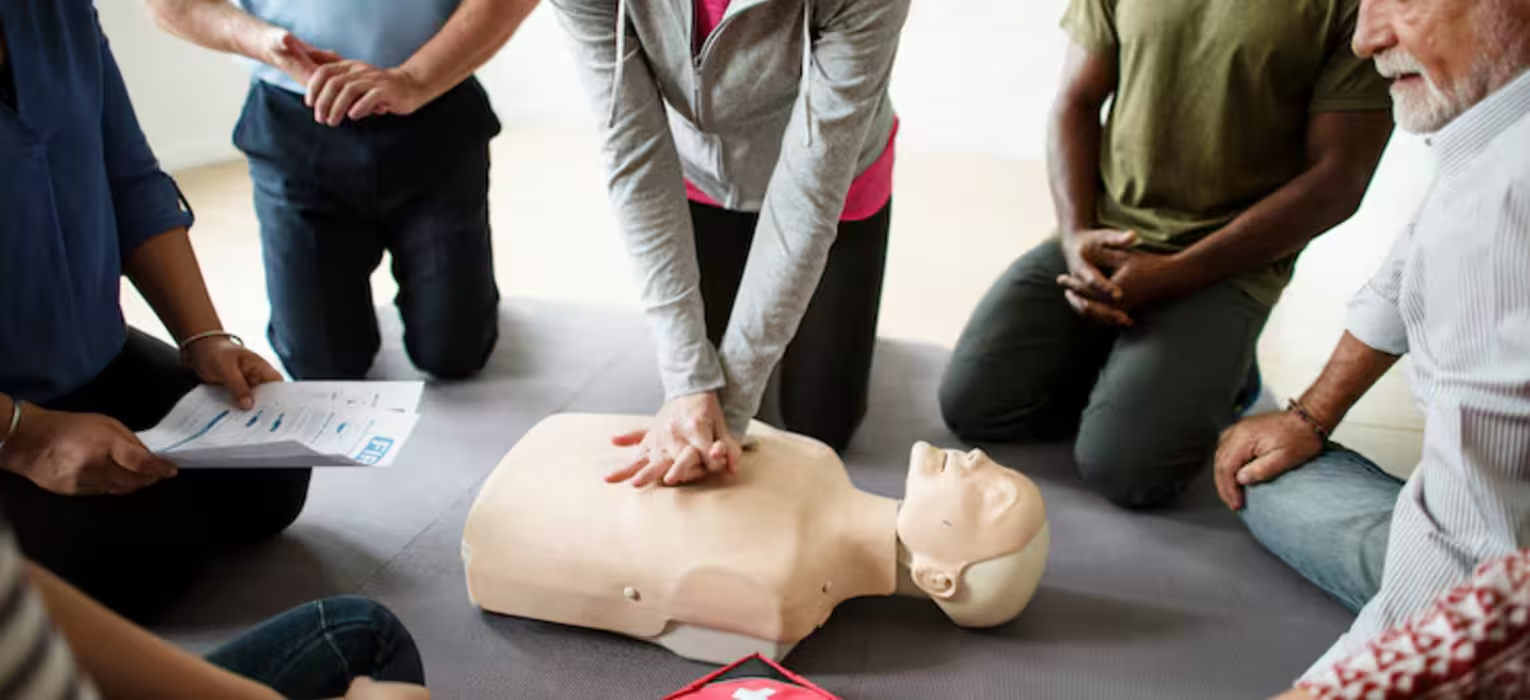
Hands-On PracticeRecognition of cardiac arrest, high-quality chest compressions, rescue breathing, and AED operation — coordinated with bystander first aid response.
Full CPR Certification →AHA AlignedAdult, child, and infant choking protocols. Back blows, abdominal thrusts, chest thrusts, and unconscious victim airway management.
Simulated PracticeBurn classification, scene safety, cooling techniques, dressing, and escalation criteria across all three burn mechanism types.
Scenario-BasedHypovolemic, anaphylactic, neurogenic, and cardiogenic shock types. Recognition, positioning, warming, and simultaneous cause treatment protocols.
Clinical ProtocolsFracture vs. sprain assessment, improvised and commercial splinting, open fracture care, circulation checks, and spinal precautions.
Hands-On PracticeHeat exhaustion vs. heat stroke differentiation. Hypothermia and frostbite staging and field management for construction, oil & gas, and outdoor workers.
Industry RelevantTonic-clonic seizure management, focal seizure recognition, postictal care, diabetic emergencies, and sudden altered consciousness protocols.
Protocol TrainingHow to call 911 effectively, scene safety assessment, bystander coordination, incident documentation, and handoff to incoming EMS.
Leadership SkillsIndustry Coverage
First aid emergencies don't discriminate by industry. We deliver on-site training across all 16 industries we serve — with content adapted to your team's actual hazards.
Lacerations, fractures, eye injuries, and heat emergencies are daily risks on active job sites. First aid response before EMS arrives is often the difference between a minor incident and a fatality.
Construction Safety Training →Machine guarding failures, chemical burns, and crush injuries require trained responders who can act immediately while machinery is shut down and EMS is called.
Manufacturing Safety Training →Forklift incidents, falling inventory, and repetitive strain emergencies make first aid readiness essential in high-traffic warehouse environments.
Warehousing Safety Training →Remote worksites with extended EMS response times make first aid training an operational necessity for every field worker — not just a compliance requirement.
Oil & Gas Safety Training →Burn injuries from kitchen environments, choking incidents in dining areas, and allergic reactions require confident trained bystanders before symptoms escalate.
Hospitality Safety Training →From playgrounds to laboratories, educational environments see a full spectrum of first aid emergencies — trained staff are a critical layer of student and faculty safety.
School Safety Training →Frequently Asked Questions
OSHA standard 1910.151 (General Industry) requires trained first aid providers when a medical facility is not in "near proximity" — defined as 3–4 minutes. For construction, 1926.50 requires first aid supplies and trained personnel on every job site. Our training is specifically designed to satisfy these OSHA requirements and provide documentation for audits.
Our Basic First Aid Overview runs 4–8 hours depending on scope. A foundational half-day covers all 9 core skill areas. A full-day format adds extensive hands-on practice and scenario simulations. A condensed 2-hour refresher is available for teams that completed the full course within the past two years. All formats are delivered on-site at your facility.
The Basic First Aid Overview includes CPR and AED awareness within the first aid framework. Full AHA-certified CPR/AED certification is a separate program we also offer on-site. Many organizations combine both for a comprehensive one-day event. See our CPR Certification page for full details.
OSHA and most industry standards recommend renewal every two years at minimum, with annual refreshers for high-risk environments. CPR certification requires renewal every two years per AHA guidelines. We recommend refresher training after significant staff turnover or following any serious incident where first aid response was required.
We bring all training materials, mannequins, bandages, simulated wound supplies, and scenario props required for the course. We do not sell permanent first aid kits, but as part of training we review OSHA kit requirements and help organizations assess whether their current kits are compliant with applicable standards.
This is extremely common. Our military and emergency service backgrounds mean we know how to build confidence rather than amplify anxiety. Simulations use training materials, not actual blood. The psychological framework of first aid — staying calm, having a clear plan, knowing each step — is specifically designed to suppress the panic response that causes hesitation in real emergencies.
Related Programs
First aid knowledge is not a nice-to-have — it is a life-safety infrastructure investment. Safety Is A Mindset delivers hands-on, scenario-driven basic first aid training directly at your worksite, taught by instructors who have used these skills under real pressure.
Combat medical experience — instructors who have used first aid under genuine life-or-death pressure.
Emergency medical technician training and active firefighting experience inform every scenario.
Official Health & Safety Institute authorization — certifications recognized nationwide.
Every participant receives training documentation ready for OSHA audits and inspections.
Tier: 2
Course ID: 17808
Languages: English, Spanish, French Canadian, Korean, Russian, Thai, Vietnamese, Chinese (Simplified), German, Hindi, Polish, Brazilian Portuguese
Respond with CPR
Use an AED
29 CFR 1910 Subpart K - Medical and First Aid
1910.151 - Medical Services and First Aid

