AVIRT for Biotech and Life Sciences
AVIRT Training for Biotech Labs, Research Sites and Life Sciences Teams
Badge-controlled doors, hazardous materials and gowning rules make research buildings unlike any office. AVIRT training for biotech teams helps scientists, technicians and support staff respond to violence without creating a second emergency along the way.
- HSI Authorized Training Center
- AHA Certified Instructors
- OSHA Outreach Training
- Navy Corpsman Instructor
- Onsite & Online Training
Research Buildings Change the Usual Rules
Standard active threat advice says to get out if you can and lock yourself in if you cannot. In a life sciences facility, both choices come with complications. A lab may lock securely but hold flammable solvents, compressed gas cylinders or biological agents. A cleanroom may have only one gowning exit. Freezers, incubators and long-running experiments tempt people to stay behind. And because access is controlled, staff sometimes assume that danger cannot get inside, which slows their reaction when it does.
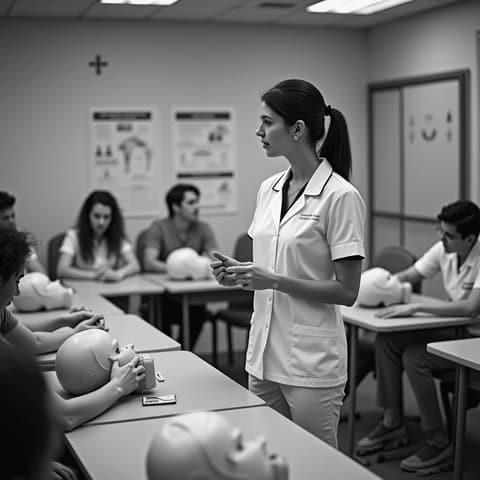
Active Violence Immediate Response Training, the roughly four-hour HSI course we teach, gives staff a decision framework and Stop the Bleed skills. For biotech clients we add scenarios built around the building's real hazards and access controls, so the choices staff rehearse are safe ones.
Lab Hazards That Shape Active Violence Decisions
Instructors review these with your environmental health and safety team before training.
| Feature of the space | Why it matters during an attack | What staff practice |
|---|---|---|
| Flammable or reactive chemicals | A barricade near storage can create fire or exposure risk | Choosing shelter rooms away from chemical storage when possible |
| Biological containment areas | Leaving abruptly may breach containment procedures | Weighing life safety against containment, and when to simply leave |
| Compressed gas cylinders | Can be damaged or create projectile hazards | Avoiding cylinder areas as shelter or cover |
| Cleanroom gowning and airlocks | Few exits and slow doors | Knowing emergency exit routes and when gowning protocol is suspended |
| Badge-access doors | Can trap staff or slow responders | Holding doors securely, and telling police how to get in |
Who Should Attend in a Life Sciences Organization
-
Scientists and lab technicians
Often working alone late at night or on weekends, with hazards nearby.
-
EHS and biosafety officers
They align AVIRT decisions with chemical hygiene and biosafety plans.
-
Security and reception
Badge control, visitor management and the first warning at the door.
-
Clinical and patient-facing staff
Clinics and trial sites see the public and occasionally distressed family members.
-
Facilities and vivarium staff
They know mechanical spaces, roof access and alternate exits better than anyone.
Threats Specific to Biotech and Healthcare Settings
Most workplace violence in any industry comes from people with a connection to the workplace: current or former employees, partners, or clients. Research organizations add a few of their own concerns. Layoffs after a failed trial, disputes over credit or funding, and personal conflicts in small, high-pressure teams can all create grievances. Clinical sites may see visitors under emotional strain. Some organizations attract protest activity that, while usually lawful, deserves a plan.
The recognition portion of AVIRT helps staff and managers notice concerning behavior early and use your reporting channels. Our online workplace violence prevention course extends that awareness to everyone, including contractors.

Building a Complete Biotech Safety Program Around AVIRT
AVIRT covers one hazard among many. These programs round out the picture for lab-based employers:
- Bloodborne pathogens training for anyone who may be exposed to blood or other potentially infectious materials, including during bleeding control
- Online chemical safety and compressed gas safety courses for lab staff
- AHA CPR and AED certification for lab emergency teams
- Broader online biotech and healthcare safety training for new hires and contractors
Planning a Session at a Research Facility
-
Meet with EHS and security
A short call covers hazard zones, restricted areas, alarm systems and any existing lockdown or shelter procedures, as part of the complimentary needs assessment.
-
Walk the building
Instructors tour public corridors, office wings and the outside of controlled suites to choose realistic, safe drill locations.
-
Train by group
Lab, clinical and administrative staff can train together or separately. Group pricing applies from 10 participants, and shift-based sessions are easy to arrange.
-
Update the plan
Findings from drills, such as a cleanroom with no secondary exit or a missing bleeding control kit near the vivarium, feed back into your written emergency procedures.
Biotech AVIRT FAQ
Do lab workers need to wear gloves during bleeding control?
Gloves are part of every bleeding control kit and are taught in class. Your existing bloodborne pathogens program also applies.
Can training happen inside BSL or cleanroom areas?
Usually not. We hold drills in adjacent corridors and office areas and talk through the controlled spaces with diagrams and your biosafety team, so no containment rules are broken.
What if someone refuses to leave an experiment?
This comes up in nearly every lab class. Instructors are clear that no sample or dataset is worth a life, and we encourage leadership to say so explicitly in your emergency plan.
Do you work with hospitals and clinics too?
Yes. Clinical settings share many of the same concerns, and their staff often bring medical knowledge that speeds up the bleeding control portion.