
AVIRT for Manufacturing
AVIRT Training for Manufacturing Plants and Production Teams
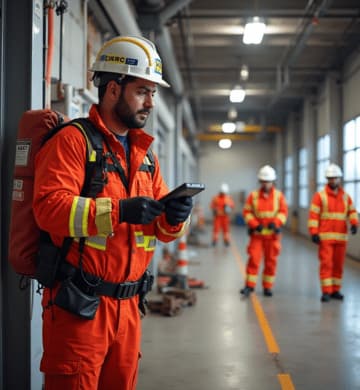
Our founder spent about 14 years running safety programs inside a high-volume bottling operation. AVIRT training for manufacturing draws on that plant-floor experience so the plan works at 3 a.m. on second shift, not just in the conference room.
- HSI Authorized Training Center
- AHA Certified Instructors
- OSHA Outreach Training
- Navy Corpsman Instructor
- Onsite & Online Training
Built by Someone Who Has Worked the Floor
Brandon S. Beaver served as Manufacturing Technology Manager for Safety at Niagara Bottling, combining OSHA compliance with Lean Six Sigma continuous improvement. That background shapes how we teach Active Violence Immediate Response Training in plants: we respect takt time and uptime, we know what a line changeover looks like, and we understand that a plan nobody can follow while wearing safety glasses and earplugs is not a plan.
AVIRT itself is an HSI course of about four hours. It teaches recognition of warning signs, a fast decision framework, communication during an incident and Stop the Bleed techniques. In a plant setting, we add scenarios that reflect large footprints, running equipment and round-the-clock shifts.
Safety is a mindset — it's built through repetition, not read from a manual.
Plant Areas and the Decisions They Raise
| Area | Challenge | Planning point |
|---|---|---|
| Production floor | Noise, long sightlines, few walls | Alert method that works with hearing protection, and pre-planned exit paths |
| Automated cells and robotics | Fenced zones and interlocked gates | Whether operators should stop equipment, and how to do it fast |
| Maintenance shop and tool crib | Tools that can be misused, isolated staff | Shelter options and check-in methods for people working alone |
| Shipping and receiving docks | Outside drivers, open doors, forklift traffic | Closing docks quickly and moving people away from truck lanes |
| Break rooms and locker rooms | Crowds at breaks and shift change | Secondary exits and doors that can be secured |
| Front office and lobby | Visitors, applicants and terminated employees | Visitor screening and a direct line to security |
Should the Line Stop?
This is one of the first questions plant managers ask. There is no single answer: shutting down a line can free operators to move and make it easier to hear, but some processes become hazardous if abandoned mid-cycle. We work through your equipment with your engineering or maintenance leads so operators know which machines to e-stop, which to leave running and which hazards to avoid while leaving. This connects naturally to your lockout/tagout program and machine guarding training, since those already define safe stopping.
Recognizing Trouble Before It Reaches the Floor
Plant violence rarely comes out of nowhere. Supervisors and coworkers often see the build-up: an employee making threats after discipline, a feud between crews that keeps escalating, a worker whose spouse keeps calling the plant, or someone recently terminated who still has a badge or knows the gate code. AVIRT teaches people to treat those signals as information worth reporting, and we encourage plants to make sure HR, security and front-line supervisors all know who to call and what happens next.
Many plants sit in industrial parks or on the edge of town, and a large site can add several minutes between the gate and the injured person. That gap is why the bleeding control portion of the class is so practical: the people already on the floor will be the ones keeping a coworker alive until EMS can reach them. We also recommend having a plan for meeting the ambulance at the right gate and guiding it through the site.
Bringing Your Plant Emergency Team Into the Plan
-
Train the responders first
Plant ERT members, first-aid volunteers and security often become the de facto leaders. They attend the first session.
-
Assign roles by area
Each department needs someone who sweeps their area, closes doors and accounts for people.
-
Stage bleeding control kits
Place kits beside AEDs and first aid stations so responders know where to look on every shift.
-
Run every shift
Offer back-to-back sessions so nights and weekends receive the same training. Group pricing applies from 10 participants.
-
Practice with the rest of the plant
Short follow-up drills during safety meetings keep the plan familiar between formal classes.
Manufacturing AVIRT FAQ
How is this different from your general industrial AVIRT page?
This page focuses on production plants with lines, shifts and automated equipment. Our industrial workplace AVIRT program addresses heavy-industry sites such as mills and chemical plants with large contractor populations.
Do supervisors need special training?
Supervisors attend the same AVIRT class, but we spend extra time on their role: directing crews, accounting for people and communicating with responders. Some also take our OSHA 30 course for broader hazard knowledge.
We have several plants. Can one session cover them all?
A regional session works well for plant managers and safety leads, but we recommend onsite sessions at each plant afterward because layouts, gates and alert systems differ from site to site.
Can training happen on the production floor?
The classroom portion happens in a training room or cafeteria. Walk-throughs and short drills take place on the floor in safe areas, coordinated with production.
Does AVIRT address workplace violence prevention?
It covers recognition and reporting. For a full prevention program, add the online violence in the workplace course for all employees.