

AVIRT for Local Government
AVIRT Training for Municipalities and County Governments
Utility billing clerks, permit technicians, librarians and code enforcement officers meet frustrated residents every day. AVIRT training for municipalities helps every department respond when frustration crosses into violence.
- HSI Authorized Training Center
- AHA Certified Instructors
- OSHA Outreach Training
- Navy Corpsman Instructor
- Onsite & Online Training
Public Service Means Open Doors
Local government buildings are designed to be accessible. Anyone can walk into city hall to dispute a water bill, appeal a citation or speak at a council meeting. Many of those visits involve money, property, family matters or a sense of unfairness, and a small share of them turn hostile. Staff at the counter are rarely trained in security, and the building may serve several departments with different layouts and alarm systems.
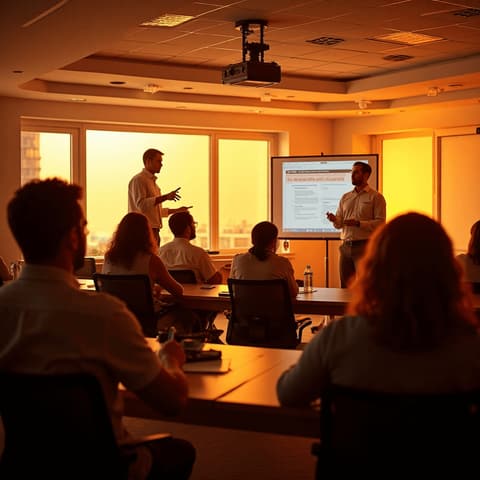
Active Violence Immediate Response Training is a four-hour HSI course that teaches employees to recognize escalation, decide quickly what to do, communicate with coworkers and 911, and treat severe bleeding. For municipal clients, we build scenarios around public counters, meeting chambers and field work, the three settings where city and county employees are most exposed.
Municipal Settings We Train For
-
City hall and county offices
Utility billing, permits, tax and records counters where disputes start face to face.
-
Council and commission chambers
Public meetings with heated comment periods and elected officials on the dais.
-
Libraries and community centers
Open all day to everyone, with staff who often work alone in branches.
-
Parks and recreation
Pools, fields and recreation centers full of families, with seasonal staff.
-
Public works and utilities
Field crews working in neighborhoods, on roadways and at treatment plants.
-
Code enforcement and inspections
Employees who visit private property to deliver unwelcome news.
Scenarios Built Around Municipal Work
Every session is adapted to your buildings and departments after a walkthrough with your safety or risk manager.
At the counter
Front-line clerks practice recognizing escalation, using panic buttons or code words, retreating to secure areas behind the counter and guiding other residents in the lobby to safety.
During public meetings
Chambers often have one main entrance, fixed seating and live broadcasts. We talk through options for elected officials, staff at the dais and the public, and how meeting chairs can pause proceedings and direct people.
In the field
Inspectors, meter readers and crews cannot lock a door. They learn to read a scene as they arrive, keep their vehicle as an escape option, check in with dispatch and leave early when something feels wrong.
Escalation Signs Municipal Staff Learn to Act On
Most hostile visits end with nothing more than raised voices. These cues suggest a situation needs a supervisor, a code word or a call for help:
- Repeated visits about the same grievance, with growing anger each time
- Threats toward a named employee, official or department, including on social media
- A resident who refuses to leave, blocks a doorway or moves behind the counter
- Statements about having nothing left to lose after a shutoff, eviction, citation or custody decision
- Someone lingering in a parking lot or hallway after being asked to leave
A Note on OSHA Coverage for Public Employees
Federal OSHA does not cover state and local government workers. In states with an OSHA-approved State Plan, public employees are covered by that plan; New Mexico's plan, for example, includes them. In Texas, Louisiana, Oklahoma and Arkansas, there is no State Plan, so municipal employers set their own safety programs, often guided by risk pools, insurers and state law. Regardless of coverage, active violence preparedness is a reasonable part of any public employer's safety program. Confirm specific obligations with your legal counsel or state agency.
For the broader set of topics city and county employees need, from driver safety for fleet operators to bloodborne pathogens for parks staff, see our municipal employee safety training courses.
Rolling AVIRT Out Across Departments
-
Start with the highest-contact roles
Counter staff, library and recreation staff, and code enforcement usually go first.
-
Include elected officials and leadership
Department heads and council members benefit from a session focused on meetings and public events.
-
Reach field crews by yard
Hold sessions at public works and utility yards before crews head out for the day. Group pricing applies from 10 participants.
-
Back it up with online learning
The online workplace violence course reaches every employee, including part-time and seasonal staff.
Municipal AVIRT FAQ
Should police and fire attend with civilian staff?
Their participation is welcome and often helps civilian staff understand what responders will do. Our separate public safety AVIRT program is built for fire, EMS and dispatch personnel themselves.
Can small towns afford this?
Small towns often combine departments, or partner with neighboring jurisdictions, to reach the 10-participant group discount. We provide individual quotes after a free needs assessment.
Does AVIRT help us write an emergency plan?
It informs one. Pair it with our active shooter response planning service if you need help documenting procedures for each building.
Do you also teach CPR to city staff?
Yes. Many cities pair AVIRT with AHA CPR and AED certification for pool, recreation and front-desk staff.