AVIRT for Elementary and Secondary Schools
AVIRT Training for K-12 Schools: Preparing Adults Who Protect Children
In a school, the adults in the room are responsible for dozens of children who look to them for every decision. AVIRT training for K-12 schools gives teachers and staff practiced, realistic options for the first minutes of a violent event on campus.
- HSI Authorized Training Center
- AHA Certified Instructors
- OSHA Outreach Training
- Navy Corpsman Instructor
- Onsite & Online Training
What Makes Schools Different
Most active violence training assumes adults deciding for themselves. A classroom teacher is instead deciding for twenty-five students who may be six years old or sixteen, may not follow instructions instantly, and may include children with mobility or sensory needs. Lockdown drills teach the mechanics, but they rarely ask the hard questions: what if a child is in the restroom, the class is at recess, or the threat is already in the hallway outside the door?
Active Violence Immediate Response Training, an HSI course of roughly four hours, gives staff a way to think through those questions and practice the answers in their own building. It also teaches hemorrhage control, which matters because the people with an injured student in the minutes after an attack will be teachers, coaches and office staff, not paramedics.
Every Adult on Campus Has a Role
We encourage districts to train more than classroom teachers. Each group faces its own version of the problem.
-
Classroom teachers
Securing a room quickly, keeping students quiet and calm, and judging when evacuation is safer than staying.
-
Front office staff
Visitor screening, recognizing concerning behavior at the entry vestibule, and triggering the alert without delay.
-
Coaches and PE staff
Gyms, fields and locker rooms have wide openings and large groups, so exit choices look very different.
-
Cafeteria and custodial teams
Often in shared spaces with many students and few lockable doors; frequently the first to notice something out of place.
-
Bus drivers and aides
Arrival and dismissal are crowded, open and hard to control, and drivers need a plan for loading zones.
-
Nurses and health aides
Natural leaders for a bleeding control response, and often responsible for maintaining campus kits.
Warning Signs School Staff Learn to Take Seriously
Most attacks are preceded by behavior someone noticed. Part of the class is helping staff connect those dots and report them through your district process.
- Direct or veiled threats in conversation, writing, art or online posts
- Unusual interest in past attacks or weapons, especially combined with a grievance
- A sudden change in behavior, isolation or talk of having "nothing to lose"
- Unfamiliar adults on campus, propped exterior doors or people avoiding the front office
- A custody dispute or protective order involving a student's family
Inside a School AVIRT Session
Sessions usually happen on a staff development day or during a summer in-service week, when the building is empty of students. Instructors walk the campus first so scenarios use your real classrooms, portables, stairwells and gym.
Lockdown decisions with students present
Staff practice securing doors, using the furniture they actually have, and handling a student who is separated from the class. They also discuss when leaving the building is the better choice, such as a classroom near an exterior exit when the threat is on the opposite wing.
Treating an injured child or coworker
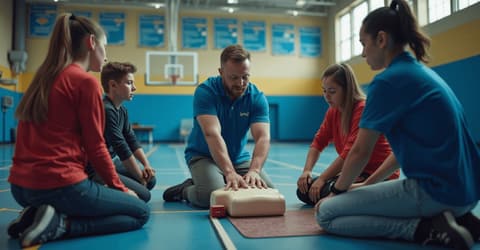
Participants apply tourniquets and pack wounds on training aids, and talk through the differences when the patient is small. Many districts add our AHA CPR and first aid classes so the same staff can handle cardiac emergencies at games and events.
When officers arrive
Responding officers will not know who is a teacher. Staff learn how to keep hands visible, follow commands and pass along what they know, then how accounting and reunification typically work afterward.

Rolling Out AVIRT Training Across a District
-
Start with campus leaders
Principals, assistant principals, nurses and campus safety coordinators attend first so they can model the response for everyone else.
-
Train by building
Each campus gets a session in its own building, because the decisions in a single-story elementary school differ from those in a multi-wing high school.
-
Equip and mark kits
Use what staff learned to decide where bleeding control kits belong: front office, gym, cafeteria, science wing and buses.
-
Revisit each year
Fold new hires in through makeup sessions and keep skills fresh with short refreshers before the school year begins.
Questions From School Leaders
Will AVIRT replace our existing lockdown procedures?
No. We work within your district's standard response protocol and terminology. AVIRT adds decision practice and medical skills on top of it.
Is the training upsetting for staff?
Instructors are careful with tone. There is no surprise simulation, and staff who have personal experience with violence can step back from any drill.
Do students participate?
This course is for adults. Student drills remain under your district's policies and age-appropriate practices.
How many staff can be trained in a day?
Larger districts often run several back-to-back sessions. Group pricing applies from 10 participants, and we will plan the schedule during your free needs assessment.
Is there online training for staff who miss the session?
Yes. Our online school safety training and the self-paced violence prevention course can cover awareness while you schedule a makeup class.
Related School Safety Pages
- K-12 School Safety TrainingOnline courses for teachers, staff and administrators.
- AVIRT for Colleges and UniversitiesOpen campuses with adult students and many buildings.
- AVIRT Training ProgramsOverview of the program and all sectors.
- Bloodborne Pathogens CourseExposure training for nurses, custodians and coaches.