Elementary and Secondary Schools
K-12 School Safety Training for Teachers and Staff
Hands-on CPR, bleeding control and emergency response practice for the adults responsible for students, plus online courses staff can finish on their own schedule.
What K-12 School Safety Training Should Cover
A school is a workplace with hundreds of children in it. Teachers, aides, bus drivers, cafeteria crews, custodians and front office staff are the first people on scene when a student collapses at recess, a coach sees a player go down, or a visitor at the door makes someone uneasy. Effective K-12 school safety training gives those adults practiced skills, not just a binder on a shelf.
Safety Is A Mindset works with districts, charter networks and private schools to build staff training around five priorities: cardiac emergencies, serious bleeding, exposure to blood and body fluids, threats of violence, and the drills that hold a campus together during a crisis. Some of that belongs in a gym with manikins and tourniquets. Some of it works better as short online modules a staff member completes during a planning period.
Core Topics for School Staff
Most campuses start with the topics below and then adjust for grade level, athletics and special education needs.
-
CPR and AED
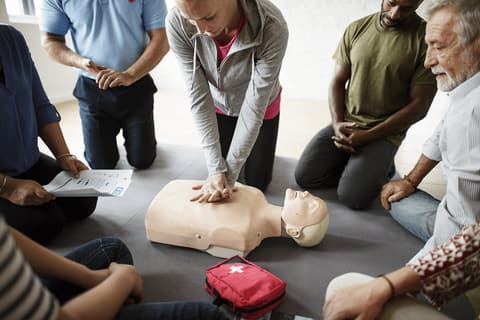
American Heart Association CPR, AED and first aid certification for coaches, nurses, PE teachers and designated responders, with practice on adult and child manikins.
-
Stop the Bleed
Tourniquet application, wound packing and direct pressure, so staff can act on a playground injury, a shop-class accident or a violent event before EMS arrives.
-
Bloodborne pathogens
Safe cleanup of blood and vomit, glove use and exposure reporting for nurses, custodians, aides and anyone assigned first aid duties.
-
Emergency and fire drills
Evacuation, shelter-in-place and reunification roles explained before the first drill of the year, so staff are not learning their job mid-alarm.
-
Violence awareness
Recognizing escalating behavior from students, parents or visitors, de-escalation basics and how to report concerns through your threat assessment process.
-
Active violence response
Our HSI-certified AVIRT program for schools blends decision-making drills with bleeding control for the worst day a campus can face.
Why Hands-On Practice Matters in Schools
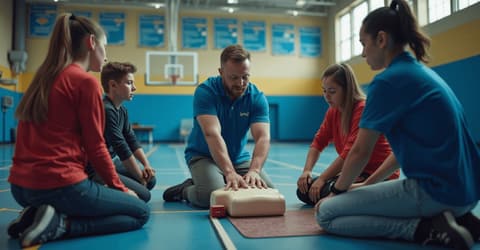
Reading about compressions is not the same as doing them for two minutes on a manikin. Pressing a tourniquet tight enough to stop bleeding takes more force than most people expect. That is why we recommend that CPR, AED and Stop the Bleed be taught in person, at your campus, ideally in the gym, library or cafeteria where staff will actually respond. Our instructors bring current fire and emergency medical response experience and run small-group stations so every participant gets time on the equipment.
Online courses still have a place. Bloodborne pathogens refreshers, emergency procedure reviews and violence awareness modules can be assigned to the whole staff and completed on a laptop or phone, with completion records your district can keep. That frees in-service days for the skills that require a room full of people.
A note on rules and requirements
OSHA's bloodborne pathogens standard (29 CFR 1910.1030) applies to private schools and, in states with an OSHA-approved State Plan that covers public employers, to public school districts as well. Even where it does not apply directly, it is the accepted model for exposure control. Drill frequency, emergency operations plans and CPR requirements for students or staff are set by state law and your state education agency, so confirm the specifics for your state; we will build training around whatever your plan requires.
Matching Training to School Roles
A starting point many campuses use. Every school is different, and your nurse or safety coordinator will know where the gaps are.
| Role | Hands-on (onsite) | Online assignments |
|---|---|---|
| Coaches, athletic trainers, PE staff | CPR/AED and first aid certification, Stop the Bleed | Heat stress, bloodborne pathogens |
| Classroom teachers and aides | CPR/AED for designated responders, Stop the Bleed | Emergency preparedness, violence awareness |
| School nurses and health aides | CPR/AED and first aid certification | Bloodborne pathogens, chemical safety for disinfectants |
| Custodial and maintenance staff | Stop the Bleed | Bloodborne pathogens, ladder safety, chemical safety |
| Front office and administrators | AVIRT for schools | Violence awareness, emergency preparedness |
Course links: heat stress, ladder safety, chemical safety.
Planning Safety Training Around the School Calendar
-
Summer and pre-service week
Run onsite CPR/AED and Stop the Bleed while staff are on campus without students. New hires complete online bloodborne pathogens and emergency procedure modules before the first day.
-
First weeks of school
Walk staff through evacuation and lockdown roles before the first scheduled drill, and confirm where AEDs and bleeding control kits are mounted.
-
Mid-year in-service
Add violence awareness or AVIRT for administrators and front office teams, and refresh anyone whose certification is close to expiring.
-
Spring review
Look at incident reports and drill debriefs, then schedule the next summer's hands-on sessions while budgets are being set.
Questions From School Leaders
What safety training do teachers need?
At minimum, teachers should know your emergency procedures and how to report safety concerns. Many schools also certify a group of staff in CPR/AED and first aid, train all staff in Stop the Bleed, and assign bloodborne pathogens training to anyone who may clean up blood or provide first aid. Your state may set additional requirements.
Should school staff be trained in Stop the Bleed?
Serious bleeding can come from a fall onto glass, a shop tool or a violent event, and it can become life-threatening in minutes. Stop the Bleed training is short, hands-on and well suited to non-medical staff, which is why many schools add it alongside CPR.
Can you train our staff without pulling teachers out of class?
Yes. Hands-on sessions are usually scheduled on in-service days, early-release afternoons or during summer, and online courses can be completed during planning periods or at home on any device.
Do you work with private and charter schools?
Yes. We work with public districts, charter networks and private schools. Onsite sessions are delivered across Texas and neighboring states, and schools elsewhere can request a quote or use the online courses.
How is this different from AVIRT?
AVIRT focuses on one scenario: active violence. This page covers the broader set of everyday emergencies school staff handle. Many schools combine both; see AVIRT for K-12 schools for that program.
More for Schools and Educators
- Online school safety coursesSelf-paced modules for teachers and support staff.
- AVIRT for K-12 campusesActive violence response with bleeding control.
- College and university trainingSafety programs for faculty, lab staff and campus teams.
- Bloodborne pathogens trainingExposure control for nurses, custodians and aides.
- All industries we serveSee how we train other sectors.