




Look, we have all been there. It is 2 PM in the middle of July, the humidity is thick enough to cut with a trowel, and the crew has been pushing hard since sunrise. You see a guy stumble a bit or maybe he is just looking a little more “off” than usual. In that moment, your gut tells you something is wrong, but do you know exactly what?
Understanding the difference between Heat Stroke vs. Heat Exhaustion: How to Recognize and Respond on the Jobsite is not just about checking a box for OSHA compliance. It is about making sure everyone on your team goes home at the end of the shift. Honestly, the line between “I need a break” and a medical emergency is thinner than you think.
At Safety Is A Mindset, we have seen how quickly things can go sideways. Whether you are in Virginia Beach or out in the Texas sun, the biology of heat stays the same. Let’s break down what you’re actually looking at when the mercury rises.
Meeting the Two Monsters: Exhaustion and Stroke
Think of heat-related illness as a ladder. Heat exhaustion is the middle rung where your body is screaming for help. Heat stroke is the top rung where the ladder starts to break.
Option 1: Heat Exhaustion
This is your body’s way of saying it can no longer cool itself down through sweating alone. You have lost too much water and salt. It is a serious warning shot. If you catch it here, you can usually turn things around with the right steps.
Option 2: Heat Stroke
This is a full-blown emergency. Your body’s cooling system has completely surrendered. Your internal temperature can spike to 104°F or higher in minutes. At this point, we are talking about potential brain damage or worse. This is why certified CPR training often covers environmental emergencies… because they can lead to cardiac arrest fast.
How to Tell Them Apart
| Feature | Heat Exhaustion | Heat Stroke (Emergency) |
| Mental State | Usually alert but tired | Confused, dizzy, or unconscious |
| Skin | Moist, cool, and clammy | Hot, red, and potentially dry |
| Sweating | Heavy sweating | May have stopped sweating entirely |
| Pulse | Fast and weak | Fast and strong (bounding) |
| Stomach | Nausea or vomiting | Possible nausea |
| Temperature | Below 104°F | 104°F or higher |
A Deeper Look at the Warning Signs
The Reality of Heat Exhaustion
When a worker is hitting the wall with exhaustion, they are going to look pale. They might complain of a headache that won’t quit or feel like they are about to faint.
- Pros of catching it early: You can treat it on-site with rest, shade, and water. Most people recover well if they stop immediately.
- Cons: It is easy to ignore. “I’ll just finish this last section” is the most dangerous sentence on a jobsite.
- Best Use Case: This is the time for a “Safety Minute.” If someone looks dizzy, pull them off the line. No excuses.
The Danger of Heat Stroke
This is the one that keeps safety managers up at night. The most telling sign? Confusion. If a seasoned pro starts acting like they don’t know where they are or starts slurring words, you are in the red zone.
- Pros: None. This is a life-threatening crisis.
- Cons: Permanent organ damage or death.
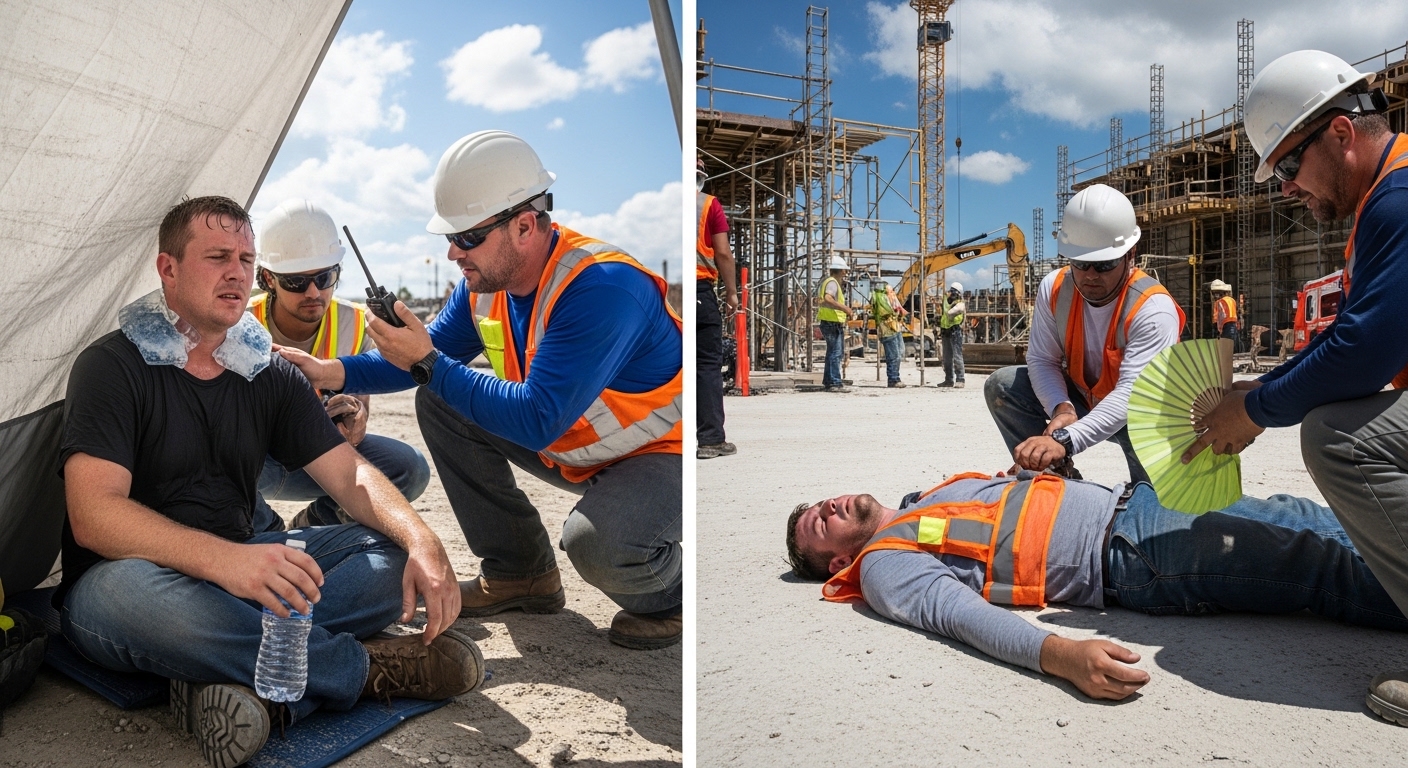
- Best Use Case: Immediate evacuation. Call 911. Move them to shade. Cool them down by any means necessary… ice packs, wet cloths, whatever you have.
What Do You Do Right Now
If you see someone struggling, follow this mental flowchart.
- Check the Mental State: Are they acting weird or confused.
- Yes: Call 911 immediately. This is Heat Stroke.
- No: Proceed to step 2.
- Check the Skin: Is it hot and dry or cool and clammy.
- Hot/Dry: Treat as Heat Stroke. Call 911.
- Clammy: This is likely Heat Exhaustion.
- The Cooling Test: Move them to shade and give water.
- If they don’t improve within 15 minutes or if they start vomiting, get professional medical help.
And here is a pro tip from our team… don’t wait for them to ask for help. On a high-pressure job, workers often feel like they can’t “quit” on their brothers and sisters. You have to be the one to pull the plug. We offer onsite safety training services specifically to help crews build this kind of “look out for each other” culture.
Common Questions About Heat Safety
Can you have heat stroke even if you are still sweating But yes, you can. While dry skin is a classic sign, many people—especially those doing heavy physical labor—will still be wet with sweat when they transition into heat stroke. Do not let “but he’s still sweating” fool you if he is confused.
Should I give someone with heat stroke a cold drink Only if they are conscious and alert. If they are confused or drifting in and out, do not put anything in their mouth. They could choke. Focus on cooling their skin from the outside instead.
How long does it take to recover Heat exhaustion might take a day or two of rest. Heat stroke recovery can take weeks and usually requires a hospital stay. It is not worth the risk.
Making Safety a Lasting Mindset
At the end of the day, Heat Stroke vs. Heat Exhaustion: How to Recognize and Respond on the Jobsite comes down to one thing… paying attention. It is about more than just water bottles and fans. It is about a culture where “toughing it out” doesn’t mean dying for the job.
But look, talking about it is one thing. Being trained to handle it when the pressure is on is another. Our team at Safety Is A Mindset is led by military-trained professionals who have dealt with extreme environments across the globe. We don’t just read from a slide deck… we give your team the tools to act.
If you want to make sure your crew is truly prepared for the summer surge, reach out to us. Whether you need CPR/AED certification or a full workplace safety overhaul, we are here to help.
Contact Information: Safety Is A Mindset 109 Swearingen Beach, East Tawakoni, TX 75472 Phone: (870) 532-8278 Email: info@safetyisamindset.com
Comments are closed