
Online Course · Health Hazards
Bloodborne Pathogens (BBP) Training Online
For employees who could reasonably be exposed to blood or other potentially infectious materials, this course covers the knowledge portion of OSHA's bloodborne pathogens training in a self-paced format.
Bloodborne Pathogens Training Online: What It Covers
Bloodborne pathogens are microorganisms in human blood and certain other body fluids that can cause disease. The three that OSHA focuses on are hepatitis B virus (HBV), hepatitis C virus (HCV) and human immunodeficiency virus (HIV). This bloodborne pathogens training online course explains how they spread at work, how to prevent exposure and exactly what to do if an exposure happens.
Learners study the topics OSHA lists for BBP training, so employers can use the course as the core of their program while adding the site-specific details only they can provide.
Course Topics
-
Diseases and transmission
Symptoms and spread of HBV, HCV and HIV, and which fluids count as potentially infectious materials.
-
Universal precautions
Treating all human blood and those fluids as if infectious, every time.
-
PPE
Selecting, using, removing and disposing of gloves, gowns, face and eye protection.
-
Sharps and engineering controls
Sharps containers, safer needle devices and why needles are never recapped by hand.
-
Cleanup and decontamination
Using appropriate disinfectants, handling contaminated laundry and regulated waste, and recognizing biohazard labels.
-
Hepatitis B vaccine
Its safety, benefits and the fact that it is offered at no cost to employees with occupational exposure.
After an Exposure Incident
-
Wash or flush right away
Wash needlesticks and cuts with soap and water; flush splashes to the eyes, nose or mouth with water.
-
Report immediately
Tell your supervisor or designated contact so the incident can be documented.
-
Get a medical evaluation
Employers must offer a confidential post-exposure evaluation and follow-up. Some treatments work best when started quickly.
-
Follow up
Complete recommended testing and keep appointments with the healthcare provider.
OSHA Requirements in Brief
The Bloodborne Pathogens Standard, 29 CFR 1910.1030, applies to employees with reasonably anticipated occupational exposure. Covered employers need a written exposure control plan and must train affected workers at initial assignment, at least annually after that, and when tasks or procedures change in ways that affect exposure.
One requirement stands out for online delivery: the standard calls for an opportunity for interactive questions and answers with a person knowledgeable in the subject. Employers using this course should make a qualified contact available and review their own exposure control plan, PPE locations and reporting process with employees.
Who Typically Needs BBP Training
- Designated first aid and CPR responders
- Healthcare, dental, laboratory and biotech staff
- Custodial and housekeeping employees who clean up blood or handle regulated waste
- Security officers, law enforcement and public safety personnel
- School nurses, athletic trainers and some education staff
- Tattoo, body art and personal care workers
Online Course or Onsite Session?
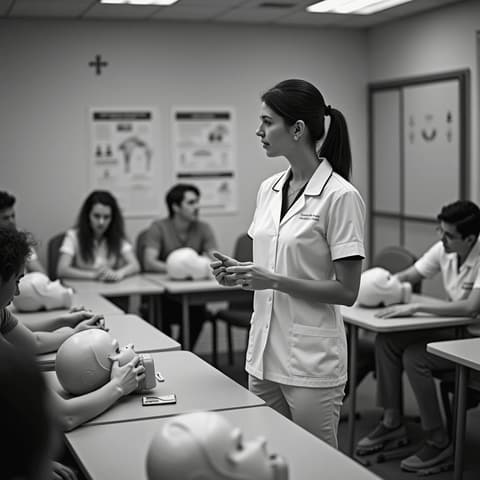
Self-paced online training works well for annual refreshers and spread-out teams. For groups that want live instruction with demonstrations of glove removal and spill cleanup, we also teach bloodborne pathogens training onsite, often alongside CPR and first aid so responders cover everything in one visit.
Bloodborne Pathogens FAQs
How often is BBP training required?
Under 1910.1030, at the time of initial assignment and at least annually thereafter for employees with occupational exposure.
Does every employee need it?
Only employees with reasonably anticipated exposure as part of their job duties. Your exposure determination identifies who they are.
Is this course enough on its own?
It covers the general content. Employers must add their own exposure control plan details and provide access to a knowledgeable person for questions.
Is the hepatitis B vaccine mandatory for employees?
Employers must offer it at no cost to employees with occupational exposure, generally within 10 working days of initial assignment. Employees may decline, but they must sign the declination statement included in the standard and can still request the vaccine later.
What counts as other potentially infectious materials?
Besides blood, the standard lists fluids such as semen, vaginal secretions, cerebrospinal, synovial, pleural, pericardial, peritoneal and amniotic fluid, saliva in dental procedures, any body fluid visibly contaminated with blood, and situations where fluids cannot be told apart.