
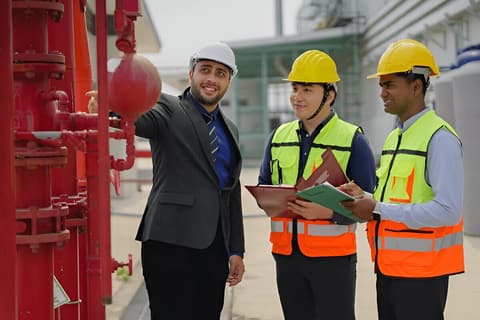
We Come to You
Onsite Safety Training at Your Facility
We load the truck with manikins, AED trainers and bleeding-control gear and drive to your site — so training happens in your building, around your shifts, using your real hazards.
- HSI Authorized Training Center
- AHA Certified Instructors
- OSHA Outreach Training
- Navy Corpsman Instructor
- Onsite & Online Training
Why Bring Onsite Safety Training to Your Workplace
Sending a crew across town for a class costs a half day of travel and lands everyone in a generic room learning about someone else's hazards. Onsite safety training flips that: the instructor comes to your plant, warehouse, school, branch or jobsite, and the lessons use the exits, equipment and chemicals your people deal with every day.
We are based in East Tawakoni, Texas, about an hour east of Dallas, and travel throughout Texas, Louisiana, Oklahoma, Arkansas and New Mexico. Organizations outside that region can request a quote for a visit, and our online course library serves teams anywhere in the country in the meantime.
What Changes When Training Happens On Your Site
-
Your floor plan becomes the scenario
Active violence drills use your actual hallways and lockable rooms; CPR scenarios start at the spot where your AED really hangs.
-
Your hazards, not textbook ones
OSHA discussions point to your machines, your chemicals and your fall exposures, which makes recognition stick.
-
Built around production
Early starts for night shift, split sessions so a line keeps running, weekend classes when weekdays are impossible.
-
Nobody travels but us
No mileage reimbursements, no lost drive time, and no one skips class because they could not get a ride.
-
Whole crews train together
Teams learn the same language and roles at the same time, which is how they will need to respond.
-
Fresh eyes on your site
Instructors who walk your floor often notice blocked exits, missing kits or unclear signage worth fixing.
How an Onsite Visit Is Planned
-
Needs assessment
A complimentary conversation about your workforce, hazards, shifts and deadlines. We recommend which programs fit and which can be handled online.
-
Site details
We ask for the address, room options, headcount per shift and any access rules such as PPE, badges or safety orientation for visitors.
-
Agenda and quote
You receive a proposed schedule and pricing. Group discounts start at 10 participants.
-
Training day
We arrive early, set up stations and teach. Where needed, we tailor drills on the spot after seeing the space.
-
Close-out
Cards or completion records, a roster for your files, and notes on anything we spotted that deserves attention.
Programs We Deliver Onsite
| Program | Typical audience | Outcome |
|---|---|---|
| CPR, AED and first aid | Designated responders, supervisors, any staff | AHA card valid two years, issued the same day |
| Active shooter training (AVIRT) | Whole workforce | HSI-certified course, about 4 hours |
| OSHA 10-hour | Workers in construction or general industry | Official DOL outreach card |
| OSHA 30-hour | Supervisors and safety leads | Official DOL outreach card |
| Bloodborne pathogens | Staff with occupational exposure | Documented training under 1910.1030 |
| Active shooter response planning | Leadership and facilities | Facility-specific plan and drills |
What Your Site Needs to Provide
We bring the training equipment and materials. From you we need only a few basics.
- A room large enough for the group, with floor space to kneel for CPR and bleeding control practice
- Tables, chairs and access to power for a projector and AED trainers
- A point of contact who can let us in early and answer questions about the building
- Permission to walk the areas we will use in scenarios, with any required PPE or escort
- A participant list, so cards and records are issued accurately
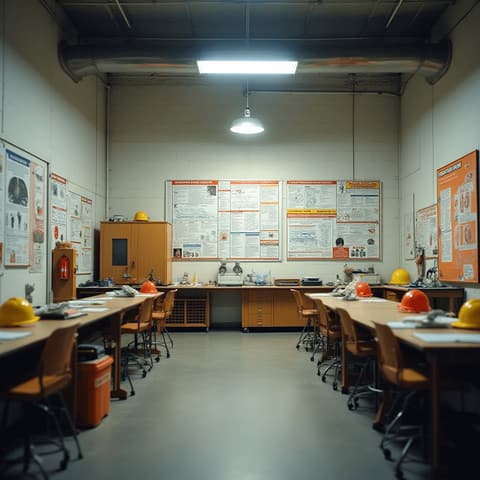
Onsite Training for Multi-Shift and Multi-Site Operations
Plants and distribution centers that run around the clock rarely can pull everyone at once. We commonly teach the same course several times in one visit so each shift attends during its own hours. For organizations with more than one location in our travel region, we can sequence visits so every site gets consistent instruction and records arrive in the same format.
When some employees cannot attend in person — remote staff, new hires between visits — assign the matching module from our online course library so nobody is left untrained until the next trip.
Onsite or classroom — which do you need?
Both are instructor-led. Onsite means the class is shaped by your physical location and equipment. A classroom-style in-person class focuses on the teaching format and can be held wherever suits the group. Many clients use both.
What Onsite Training Looks Like in Different Workplaces
The logistics shift with the setting. A few examples of how we adapt:
Manufacturing plants and warehouses
We work around line schedules and forklift traffic, use a break room or training room near the floor, and point to the real guarding, lockout points and dock edges during discussion. See our manufacturing safety training page for sector detail.
Construction jobsites
Classes run in a site trailer, a nearby meeting space or the general contractor's office, often early in the morning before work starts. Fall, trench and struck-by examples come straight from the project in front of the crew.
Schools, offices and bank branches
Sessions fit around bells, business hours or lobby closures. Active violence drills use classrooms, teller lines and conference rooms so staff rehearse in the space they would actually be in.
Remote and field operations
Oilfield, utility and mining crews may be far from emergency care, so bleeding control and first aid get extra time. We coordinate access, PPE and site orientation with your safety lead before we arrive.
Safety is a mindset — it's built through repetition, not read from a manual.
Onsite Training FAQs
Which areas do you travel to?
Texas, Louisiana, Oklahoma, Arkansas and New Mexico are our regular onsite region. Other locations are quoted on request. Our service area page lists the states and cities we cover.
Is there a minimum group size?
We do not publish a strict minimum. Group pricing begins at 10 participants, and smaller groups can often be combined with another session or handled online. Ask and we will find the practical option.
Can you train at night or on weekends?
Yes. We schedule around the hours your people actually work, including early mornings and weekends.
Are onsite certifications the same as classroom ones?
Yes. An AHA card, an OSHA outreach card or an AVIRT completion carries the same weight wherever the class was taught; the standards and skills checks do not change.
How far ahead should we book?
The earlier the better for large or multi-day programs such as OSHA 30. For urgent needs, call — we will tell you honestly what dates are realistic.