




Does Your Team Actually Need First Aid Training? (The Real Answer)
I was talking to a local business owner in Greenville the other day—let’s call him Mike. Mike runs a small manufacturing shop. He’s a great guy, cares about his people, but he was totally stressed out about compliance. He asked me, “Look, honestly, do I have to get everyone certified in first aid, or is a kit on the wall enough?”
It’s a question I hear all the time. There’s a lot of “regulatory noise” out there, and as a small business owner, you just want to know the bottom line so you can keep your doors open and your people safe.
The short answer? It’s rarely just about having a box of bandages. It’s about being ready when someone’s life is actually on the line.
The OSHA “Rule of Thumb”
If you’re looking for the technical side, OSHA (the Occupational Safety and Health Administration) has a pretty clear stance. Essentially, if you aren’t located near an infirmary, clinic, or hospital that is used for the treatment of all injured employees, then you must have a person or persons adequately trained to render first aid.
In a busy area like Greenville, TX, you might think, “Well, the hospital is only ten minutes away.” But think about it this way: if someone stops breathing or has a major injury, ten minutes is a lifetime. That’s why many businesses choose to be proactive with workplace safety training.
Industries That Can’t Afford to Skip It
While every business benefits from a safer culture, certain industries are practically required to have trained responders on-site due to the nature of their work. We’ve seen a huge need for safety training for businesses in these sectors:
- Construction: With heavy machinery and height risks, it’s a non-negotiable.
- Manufacturing: Fast-moving parts and chemical exposures make first aid CPR classes essential.
- Schools and Childcare: Protecting our kids means every staff member needs emergency preparedness training.
- Logistics and Warehousing: High-traffic environments with forklifts and loading docks are prime spots for accidents.
- Public Safety and Municipalities: Those on the front lines of our community always need the latest safety certification courses.
What Does “Adequate Training” Look Like?
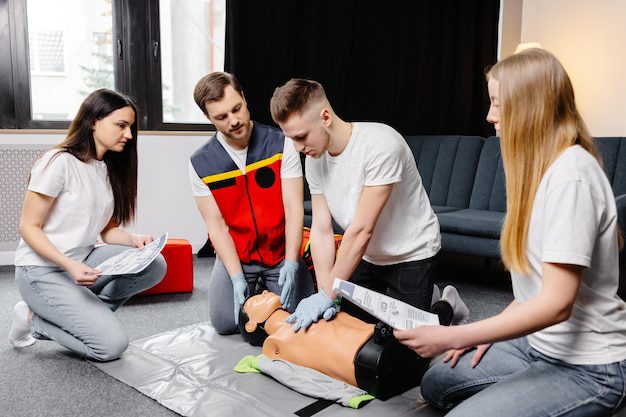
It’s not just about a quick video. To truly be prepared, your team needs to understand the “Chain of Survival”. A solid CPR and first aid training program should cover:
- Sudden Cardiac Arrest (SCA): Knowing how to use an AED effectively.
- Bleeding Control: From direct pressure to using a tourniquet in life-threatening situations.
- Medical Emergencies: Recognizing heart attacks, strokes, and seizures before they escalate.
- Environmental Hazards: Handling heat and cold emergencies—something we definitely deal with here in Texas.
Expert Insight: Why “Check the Box” Isn’t Enough
I’ve spent years in this field, and here is what I’ve learned: compliance keeps the lawyers happy, but training saves the person. I always tell my clients at Safety Is A Mindset that the goal isn’t just to get a card. The goal is to build a culture where employees feel confident.
When you invest in onsite safety training, you’re telling your team that their lives matter. It changes the vibe of the whole workplace. People work better when they know someone has their back.
Is It Time to Get Your Team Certified?
If you’re sitting there thinking, “I think we’re covered, but I’m not 100% sure,” it’s probably time for a workplace risk assessment training.
Don’t wait for an accident to find out where the gaps are. Whether you need CPR classes in Greenville, TX or a full active shooter training for employees, we can help you create a custom plan that fits your business.
Let’s keep your team safe. At Safety Is A Mindset 109 Swearingen Beach, East Tawakoni, TX 75472 (870) 532-8278 info@safetyisamindset.com
School Support Staff: Bus drivers, cafeteria workers, and maintenance staff often need first aid training due to their direct contact with students and potential emergency response roles.
Coaches and Athletic Staff: Sports programs universally require first aid training due to injury risks associated with physical activity and competition.
Childcare Providers: Daycare centers, preschools, and after-school programs typically mandate first aid certification for all staff members working directly with children.
High-Risk Industries and Occupations
Certain industries face elevated accident risks that necessitate first aid training:
Construction Workers:Construction sites present numerous hazards requiring immediate response capability. Supervisors and safety personnel typically need advanced first aid training, while general workers may require basic certification.
Manufacturing Employees:Manufacturing environments with heavy machinery, chemicals, or extreme temperatures often mandate first aid training for supervisors and designated responders.
Transportation Workers: Commercial drivers, airline crew members, and public transit operators frequently require first aid certification due to passenger safety responsibilities.
Oil and Gas Workers:Oil and gas operations, particularly in remote locations, mandate comprehensive first aid training due to accident risks and limited access to medical facilities.
Mining Operations: Underground and surface mining operations require extensive first aid training due to hazardous working conditions and remote locations.
Public Safety and Emergency Services
First responders require the most comprehensive first aid training:
Police Officers: Law enforcement agencies increasingly require first aid certification, recognizing that officers often arrive at medical emergencies before paramedics.
Firefighters: Fire departments universally mandate advanced first aid training as part of basic firefighter certification and ongoing professional development.
Security Personnel: Building security, event security, and private protection services often require first aid training, especially for high-occupancy venues or special events.
Emergency Management Personnel: Disaster response coordinators and emergency management officials need comprehensive first aid training to support community emergency response efforts.
Recreation and Fitness Industries
Organizations serving the public in recreational settings typically mandate first aid training:
Lifeguards and Pool Staff: Aquatic facilities universally require first aid certification for all staff, given specific drowning risks and water-related injuries.
Fitness Professionals: Personal trainers, group fitness instructors, and gym staff often need first aid certification due to exercise-related medical emergencies and facility liability concerns.
Recreation Center Workers: Community centers, YMCAs, and similar facilities usually mandate first aid training for program staff and facility supervisors.
Outdoor Recreation Guides: Hiking guides, camping instructors, and adventure tourism operators require first aid training due to remote locations and limited access to emergency medical services.
Hospitality and Service Industries
Customer-facing businesses increasingly require first aid training:
Hotel and Restaurant Staff: Management personnel in hospitality often need first aid certification to respond to guest emergencies and meet insurance requirements.
Event Coordinators: Wedding planners, conference organizers, and special event managers may require first aid training, particularly for large gatherings or outdoor events.
Retail Management: Major retail chains often mandate first aid training for supervisors and managers, recognizing their responsibility during customer emergencies.
Entertainment Venues: Theaters, amusement parks, and sports facilities typically require first aid training for staff due to large crowds and potential for accidents.
Volunteer Organizations and Non-Profits
Community service organizations often require first aid training:
Youth Program Leaders: Scout leaders, camp counselors, and youth organization volunteers typically need current first aid certification before working with children and adolescents.
Religious Organizations: Churches, synagogues, mosques, and other faith communities increasingly train staff and volunteers in first aid, recognizing their role as community gathering places.
Non-Profit Service Providers: Organizations serving vulnerable populations often require first aid certification, especially those working with elderly, disabled, or at-risk individuals.
Disaster Response Volunteers: Community Emergency Response Teams (CERT) and disaster relief volunteers receive comprehensive training that includes first aid certification as a fundamental component.
Specialized Populations and Settings
Certain environments present unique first aid training requirements:
Correctional Facilities: Prison and jail staff require specialized first aid training that addresses security concerns alongside medical emergency response.
Mental Health Facilities: Staff in psychiatric hospitals and treatment centers need first aid training adapted for patients with mental health conditions and potential medication interactions.
Laboratory Workers: Research facilities and clinical laboratories often require first aid training specific to chemical exposures and specialized hazards.
Agriculture Workers: Farm operations, particularly those using pesticides or operating dangerous equipment, may mandate first aid training for supervisors and designated responders.
Training Integration and Compliance
First aid requirements often integrate with broader safety training programs:
Workplace Safety TrainingIntegration: Many organizations combine first aid with general safety training, creating comprehensive emergency preparedness programs.
First Aid Training CoursesCustomization: Different industries require specialized first aid training that addresses specific hazards and emergency scenarios relevant to their operations.
Compliance Documentation: Organizations subject to first aid training requirements must maintain detailed records of employee certification, renewal dates, and training content.
First aid training requirements continue expanding as organizations recognize both legal obligations and moral responsibilities to protect employees, customers, and community members. Whether mandated by regulation, required for licensing, or driven by organizational policy, first aid training represents an essential investment in human safety and emergency preparedness. The specific requirements vary by industry, location, and role, but the underlying principle remains constant: those responsible for others’ wellbeing need the knowledge and skills to respond effectively when medical emergencies occur.
Comments are closed