




Every 36 seconds, someone in the United States dies from cardiovascular disease. When cardiac arrest strikes, the difference between life and death often comes down to one crucial factor: whether someone nearby knows CPR. This stark reality makes CPR training not just beneficial but essential for anyone who wants to be prepared when emergencies happen.
The Critical Window for Survival
When someone’s heart stops beating, brain damage begins within just four to six minutes. Emergency medical services typically take 8-12 minutes to arrive, creating a dangerous gap where immediate action determines survival. This is where CPR training becomes invaluable – it bridges that critical time gap until professional help arrives.
Consider the case of Damar Hamlin, the Buffalo Bills player who collapsed during a Monday Night Football game in January 2023. His life was saved because trained medical professionals immediately administered CPR on the field. While most of us won’t have medical teams nearby, proper CPR training equips ordinary people to become life-savers in extraordinary moments.
Real-World Impact of CPR Knowledge
The American Heart Association reports that effective bystander CPR can double or triple a person’s chance of survival. In Seattle, where CPR training is widespread, the survival rate for out-of-hospital cardiac arrest reaches nearly 62% – significantly higher than the national average of 10.4%.
Take Sarah Martinez, a teacher from Phoenix who saved her colleague’s life during lunch break. When her fellow teacher collapsed from sudden cardiac arrest, Sarah’s CPR certification training kicked in immediately. Her quick response kept blood flowing to vital organs until paramedics arrived, and her colleague made a full recovery.
Who Benefits from CPR Training?
Healthcare Workers: While medical professionals receive extensive training, regular CPR refreshers ensure skills remain sharp. Nurses report that hands-on practice sessions help them maintain confidence during actual emergencies.
Parents and Caregivers: Children face unique risks, from choking incidents to drowning accidents. Pediatric CPR techniques differ from adult methods, making specialized training crucial for those caring for young ones.
Workplace Teams: Many companies now require CPR certification for employees. Construction sites, manufacturing facilities, and office buildings all benefit from having trained responders on-site. Workplace safety training programs often include CPR as a core component.
Community Members: Restaurant staff, gym employees, coaches, and volunteers frequently find themselves in situations where CPR knowledge proves life-saving. Even teenagers can learn these skills effectively – many high schools now offer CPR training as part of health education.
Beyond Basic Chest Compressions
Modern CPR training covers much more than the traditional “push hard, push fast” approach. Today’s programs include:
- AED Integration: Automated External Defibrillators work alongside CPR to restore normal heart rhythm. AED training essentials complement CPR skills perfectly.
- Recovery Positioning: Proper positioning prevents additional injury while maintaining airway clearance.
- Team Coordination: In group settings, effective CPR requires clear communication and role delegation.
- Psychological Preparedness: Training addresses the emotional challenges of emergency response, helping participants stay calm under pressure.
The Confidence Factor
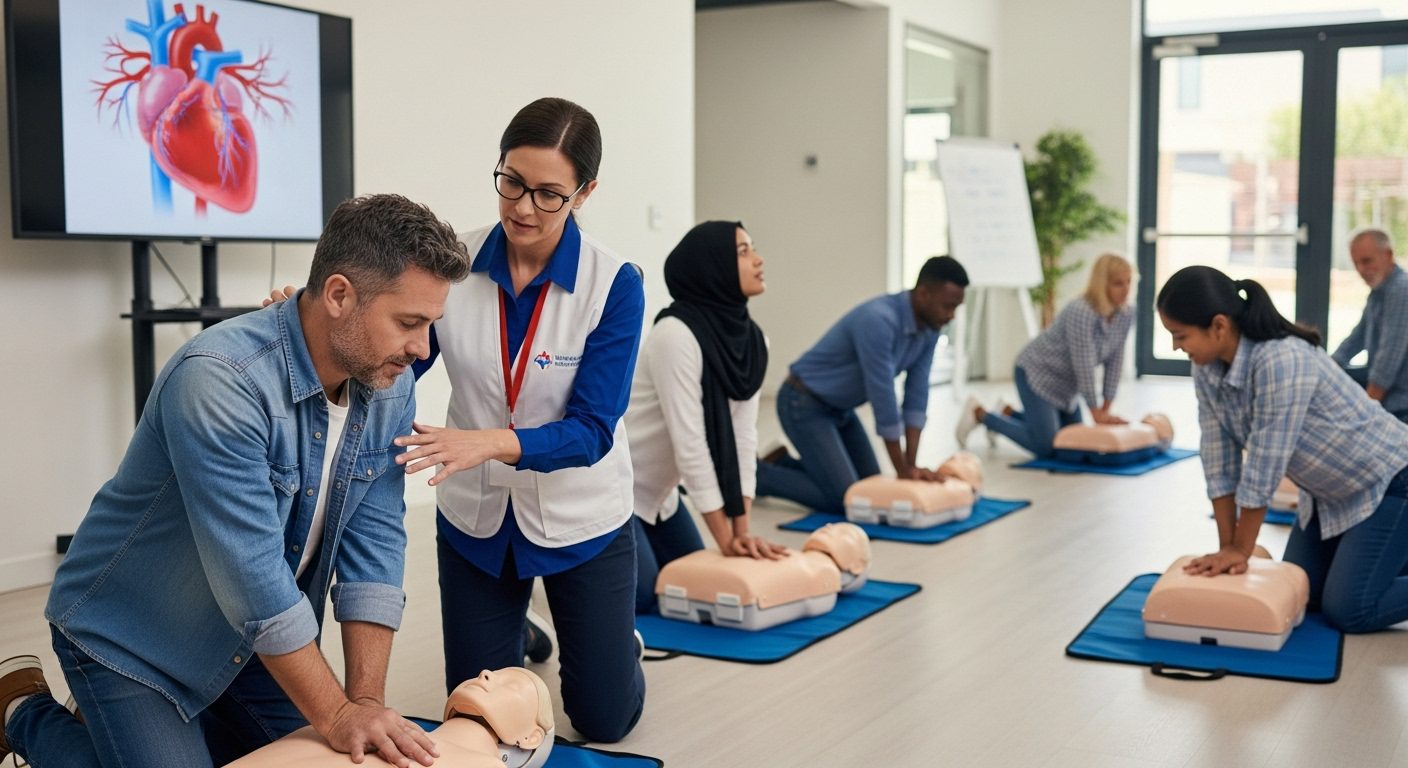
Many people hesitate to help during emergencies, fearing they might cause harm. Quality CPR training eliminates this hesitation by building muscle memory and confidence. Participants practice on mannequins, receive immediate feedback, and learn that even imperfect CPR is better than no CPR at all.
Dr. Michael Thompson, an emergency medicine physician in Chicago, emphasizes this point: “I’ve seen countless cases where bystander CPR made the difference. Even when compressions aren’t textbook perfect, the attempt to maintain circulation often provides the crucial minutes needed for advanced care.”
Cost-Effectiveness of CPR Training
The investment in CPR training pays tremendous dividends. First aid training courses that include CPR typically cost between $50-150 per person, but the potential to save a life is priceless. Many employers sponsor training for their teams, recognizing both the humanitarian and liability benefits.
Compare this modest cost to the average emergency room visit ($2,200) or ambulance transport ($1,200). When CPR training prevents or reduces the severity of medical emergencies, the financial savings become significant alongside the immeasurable human benefit.
Building Safer Communities
Communities with higher rates of CPR training see improved emergency outcomes across all age groups. Schools implementing CPR education report increased student confidence and community engagement. Emergency response training creates ripple effects that strengthen entire neighborhoods.
Local fire departments often partner with training organizations to provide community workshops. These collaborations ensure consistent, high-quality instruction while building relationships between first responders and residents.
CPR training transforms ordinary citizens into potential life-savers. In those crucial moments when someone’s heart stops beating, your knowledge becomes their lifeline. The skills you learn today might save your spouse, child, coworker, or stranger tomorrow. Don’t wait until an emergency strikes – invest in CPR training and join the ranks of those prepared to make a difference when it matters most.
Comments are closed