AVIRT & Workplace Violence
AVIRT Explained: A Quick Guide for Decision-Makers
If you have been asked to "look into AVIRT" for your organization, this briefing gives you the essentials in a few minutes: what it is, who needs it and what a session looks like.
What is AVIRT, in one paragraph?
AVIRT stands for Active Violence Immediate Response Training. It is a course that prepares ordinary employees to notice warning signs, make fast protective decisions and treat life-threatening bleeding during a violent incident, in the minutes before police and EMS can take control. Safety Is A Mindset teaches it as an HSI-certified program of roughly four hours, delivered at your facility.
That is the elevator version. The rest of this briefing answers the questions decision-makers usually ask next. If you want the full background, including how response models evolved and how to roll a program out, read our complete guide to AVIRT training. For a description of our specific course, see the AVIRT program overview.
The four building blocks
Every AVIRT session combines these elements. None of them requires prior medical or security experience.
-
Awareness
Recognizing behavior, sounds and situations that signal trouble, early enough to act.
-
Decision framework
A simple, rehearsed way to choose between leaving, securing a space and protecting yourself.
-
Bleeding control
Stop the Bleed skills: direct pressure, wound packing and tourniquet use.
-
Scenario drills
Practicing decisions and medical skills under realistic, controlled conditions.
Who needs AVIRT training?
The short answer is any organization where staff could be first on scene if violence breaks out, which covers most workplaces. In practice, the organizations that ask us about it most often fall into a few groups:
Places the public walks into
Retail stores, banks, hotels, municipal offices and clinics serve people they do not know. Front-line staff are the ones who see an escalating customer first.
Campuses and schools
Teachers, administrators and support staff are responsible for others who look to them for direction. Our school-focused AVIRT sessions are built around classrooms, hallways and student movement.
Industrial and remote sites
Plants, warehouses, job sites and energy facilities are often far from the nearest trauma center. Bleeding-control skills matter there for violence and for machinery injuries alike.
What a typical session looks like
Here is roughly how a half-day AVIRT class runs at a client site. Timing shifts with group size and setting.
-
Briefing and ground rules
The instructor sets expectations, explains that scenarios are controlled and voluntary, and invites anyone uncomfortable to step out at any time.
-
Awareness and decision-making
Short discussion blocks walk through warning signs and the decision framework, using your own building layout, exits and lockable rooms as examples.
-
Hands-on bleeding control
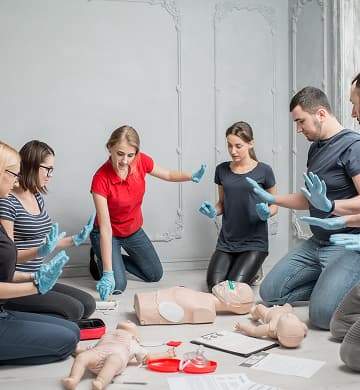
Participants pair up to apply tourniquets, pack wound trainers and hold pressure until each person can do it confidently.
-
Scenario practice
Small groups talk through and walk through realistic situations, then combine the decision and medical skills in one exercise.
-
Debrief and next steps
The group discusses what felt hard, what the plan is missing, and where bleeding-control kits should live. Completion is documented for your records.
How AVIRT differs from what your staff may have seen before
Many employees have sat through a short active shooter video or presentation. AVIRT differs in two ways that matter to a decision-maker. First, it addresses active violence broadly, not only firearms, which matches the range of incidents workplaces actually face. Second, it adds a medical component. Teaching people how to escape a threat without teaching them how to keep an injured coworker alive leaves a gap that AVIRT is designed to close. Our article on active shooter training vs. AVIRT explains that shift in more detail.
What participants walk away with
Decision-makers often want to know what changes after the class. In our experience, three things are noticeable. Employees know the building differently: they can name a second exit and a room that locks without thinking about it. They have handled a tourniquet and packed a wound trainer with their own hands, so the bleeding-control kit on the wall is no longer a mystery box. And they share a common vocabulary with coworkers and supervisors, which makes later drills, plan reviews and reporting conversations faster.
Those outcomes also feed your wider program. Staff who have been through AVIRT tend to report concerning behavior sooner, ask better questions about access control and notice when a kit has gone missing from its cabinet.
Making the internal case
If you need to justify AVIRT to leadership or a board, frame it around responsibilities you already carry. Your emergency plan should address foreseeable emergencies, and violence is foreseeable in most workplaces. Your first-aid program should match the injuries that could occur, and severe bleeding is one of them. A half-day course that addresses both, delivered once to the whole group and refreshed periodically, is a modest commitment compared with leaving those gaps unaddressed.
Questions to bring to a provider
- Is the curriculum certified, and by whom? Ours is HSI certified.
- Do participants handle tourniquets and wound-packing trainers themselves?
- Will scenarios use our actual floor plan, entrances and staffing patterns?
- How are emotionally sensitive participants supported during the class?
- What documentation do we receive afterward?
- Can the session be paired with CPR/AED or emergency plan review?
Practical details for scheduling
AVIRT is taught in person, because tourniquet and wound-packing skills cannot be learned from a screen. We deliver it at client facilities across Texas and the surrounding states through our onsite training service, and quote other locations on request. A conference room or training room with space for paired practice is all that is required; instructors bring the training equipment. Groups of 10 or more qualify for group pricing, and every inquiry starts with a complimentary safety needs assessment so the session fits your site.
Quick answers about AVIRT
How long is the course?
Our HSI-certified AVIRT course runs about four hours.
Is it only about shootings?
No. It covers active violence broadly, including incidents involving other weapons or physical assault.
Will the scenarios upset employees?
Scenarios are controlled, briefed in advance and adjusted to the group. The goal is calm competence, not shock value.
Does it replace our emergency plan?
No. AVIRT builds the people side of a plan. It works best alongside a reviewed workplace violence prevention program.