
OSHA 1910.1030
Bloodborne Pathogens Training for Workplaces With Exposure Risk
Interactive BBP training for the people who could contact blood or other potentially infectious materials on the job — designed around what OSHA's standard actually requires and taught by working emergency responders.
- HSI Authorized Training Center
- AHA Certified Instructors
- OSHA Outreach Training
- Navy Corpsman Instructor
- Onsite & Online Training
Bloodborne Pathogens Training That Meets the Standard and Makes Sense
Hepatitis B, hepatitis C and HIV can be carried in blood and certain other body fluids, and a needlestick, splash or contact with broken skin can transmit them. OSHA's Bloodborne Pathogens standard, 29 CFR 1910.1030, requires employers to protect workers who have occupational exposure — and bloodborne pathogens training is one of its central requirements.
This page describes our live BBP training service for employers: who should attend, what the session covers, and how we help you document it. Individuals who simply need a self-paced module can use our online bloodborne pathogens course; the two work well together, as explained below.
Who Typically Needs BBP Training
The standard applies based on reasonably anticipated contact with blood or other potentially infectious materials as part of job duties — not on job title alone.
-
Clinical and care staff
Nurses, aides, school nurses, clinic and long-term care employees, and dental or lab personnel.
-
Designated first aid responders
Employees assigned to give first aid or CPR as part of their job, including plant emergency teams.
-
Custodial and housekeeping
People who clean up spills, handle regulated waste or empty sharps containers.
-
Research and biotech
Lab staff working with human blood, tissue or cell lines.
-
Public safety
Security officers, corrections staff and other responders who may treat or restrain injured people.
-
Schools and childcare
Staff designated to respond to student injuries, plus coaches and aides with assigned care duties.
What OSHA Requires of BBP Training
The standard is specific about training, which makes it easier to get right. Among other things, it calls for:
Timing
Training at the time of initial assignment to tasks with exposure, at least annually after that, and additional training when changes in tasks or procedures affect exposure. It must be provided at no cost to employees and during working hours.
Content
An explanation of the standard and where to find it; how bloodborne diseases spread and their symptoms; your exposure control plan and how to get a copy; how to recognize exposure tasks; engineering controls, work practices and PPE, including their limits; hepatitis B vaccination information; what to do in an emergency and after an exposure incident; and the meaning of labels and color coding.
Interaction
Trainees must have an opportunity for interactive questions and answers with the person conducting the training, who must be knowledgeable in the subject as it relates to your workplace. This is the requirement most purely self-paced programs struggle with.
Records
Training records — dates, content summary, trainer and attendees — are kept for three years.
Live, Online or Blended BBP Training
| Format | How it works | Good fit for |
|---|---|---|
| Live onsite session | Instructor-led training at your facility, using your exposure control plan, sharps containers, PPE and spill kits | Initial training, clinical teams, first aid responders |
| Blended | Employees complete the online module, then join a short live Q&A and hands-on review with our instructor | Annual refreshers for larger or multi-shift groups |
| Online module only | Self-paced course with a completion record | Supplementing a program where a knowledgeable person is already available for questions |
Whatever the format, your site-specific information — the exposure control plan, vaccination process and post-exposure steps — must be part of the training.
What Participants Practice in a Live Session
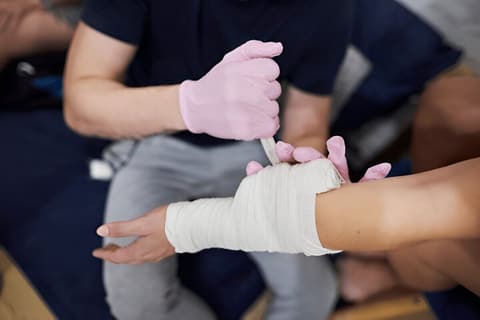
- Putting on and removing gloves, gowns and face protection without contaminating skin
- Treating every patient's blood as potentially infectious (universal precautions)
- Using pocket masks and barriers during CPR and first aid
- Cleaning a blood spill with the right disinfectant, contact time and waste handling
- Handling sharps safely and recognizing when a container is full
- Exactly what to do in the first minutes after a needlestick or splash, and who to tell
Help With the Rest of Your BBP Program
Training is only one piece of 1910.1030. During your free needs assessment we will ask about the other parts — a written exposure control plan reviewed at least annually, hepatitis B vaccination offered to exposed employees, an exposure incident procedure, labeling and regulated waste handling — and point out anything that looks incomplete so you can address it with your medical provider and safety team.
Our instructors bring a practical view of exposure. Founder Brandon S. Beaver serves as an Emergency Medical Responder and firefighter, and Travis E. Beaver is a former Navy Hospital Corpsman and current firefighter and EMR. They have handled the gloves-on reality of bleeding patients, which is the reason the session focuses on habits rather than definitions.
Setting Up BBP Training for Your Team
-
Identify exposed roles
We start with your list of job classifications and tasks where contact with blood or infectious materials is reasonably anticipated.
-
Gather site details
Send your exposure control plan, the name of your post-exposure medical provider and the PPE and disinfectants you stock, so the session reflects your workplace.
-
Pick a format and dates
Live, blended or online, scheduled by shift. Group discounts start at 10 participants.
-
Train and document
We deliver the session with time for questions and provide an attendance roster with the details OSHA expects in training records.
-
Plan the annual cycle
Put next year's refresher on the calendar now, and add new hires to training before they start exposure tasks.
Bloodborne Pathogens FAQs
Does every employee need BBP training?
No. It is required for employees with occupational exposure. Someone who might help a coworker as a Good Samaritan, without first aid being part of their job, is generally not covered — but designated first aid providers are. If you are unsure, we can help you think through each role.
How long is the training valid?
OSHA requires refresher training at least annually, plus additional training when tasks or procedures change in ways that affect exposure.
Can BBP training be combined with CPR and first aid?
Yes, and it is a natural pairing for designated responders. Many clients schedule BBP right after CPR and first aid certification.
Do you serve healthcare and biotech employers?
Yes. See our biotech and healthcare safety training page for more on these settings.
Where do you deliver live BBP sessions?
Onsite throughout Texas, Louisiana, Oklahoma, Arkansas and New Mexico; other locations are quoted on request. The online module is available anywhere.