
Active Violence Immediate Response Training
AVIRT Training for Workplaces, Schools and Public-Facing Teams
Our AVIRT training program prepares ordinary employees to recognize danger early, make fast decisions and control severe bleeding in the minutes before professional help reaches them.
An Overview of the AVIRT Training Program
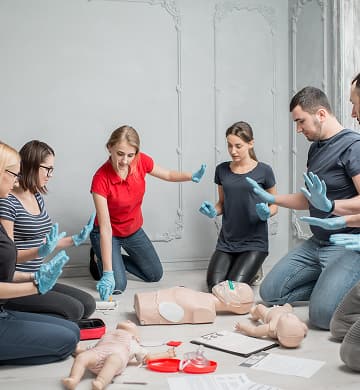
AVIRT stands for Active Violence Immediate Response Training. It is an HSI curriculum, and Safety Is A Mindset teaches it as an HSI Authorized Training Center. A standard class runs about four hours and is built for people who are not police officers, security guards or paramedics: receptionists, teachers, machine operators, tellers, nurses, drivers and supervisors.
The course grew out of the familiar "run, hide, fight" model of active shooter awareness, but it asks more of participants. Instead of memorizing three words, they practice reading a situation, choosing an action under pressure, communicating clearly and treating life-threatening bleeding with tourniquets, wound packing and direct pressure. If you want the full definition first, start with our plain-language explainer, what AVIRT is and how it works.
Every class is taught in person by instructors with real emergency experience. Founder Brandon S. Beaver serves as a firefighter and Emergency Medical Responder, and Travis E. Beaver brings six years of active-duty service as a U.S. Navy Hospital Corpsman along with TCCC instruction. They bring the course to your building so the drills happen in the hallways, stairwells and break rooms your people actually use.
Four Skill Areas Every AVIRT Participant Practices
The curriculum is compact, so each block of time goes to something people will use.
-
Recognition and awareness
Spotting pre-incident behavior, unusual sounds and changes in a room, and trusting that information early instead of waiting for certainty.
-
Immediate decisions
A simple framework for choosing between leaving, securing a space or defending yourself, based on where you are and what you can see.
-
Bleeding control
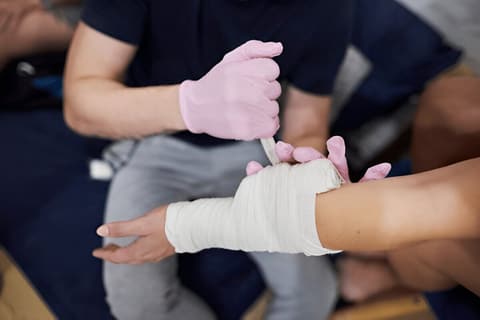
Stop the Bleed techniques: applying a tourniquet, packing a wound and holding firm pressure until responders arrive.
-
Scenario drills
Short, realistic exercises in your own spaces so the first time someone makes these choices is not during a real event.
How an Onsite AVIRT Class Comes Together
-
Needs assessment
Each inquiry starts with a complimentary safety needs assessment. We learn your headcount, shifts, building type and any existing emergency plan.
-
Site-specific planning
Instructors look at entrances, room layouts, communication tools and likely gathering points so scenarios match your real floor plan.
-
Training day
Roughly four hours of instruction and hands-on practice, scheduled around production runs, class periods or business hours.
-
Records and follow-up
Participants receive HSI course completion documentation, and we can plan refreshers, new-hire sessions or related courses afterward.
AVIRT Programs Tailored by Sector
The core skills stay the same, but the risks and the setting change a great deal from one employer to the next. A bank branch has cash, a vault and a lobby full of customers. A mine may sit an hour or more from the nearest trauma center. A hospital lab has controlled doors and staff who already know first aid. That is why we publish separate guidance for each sector we serve, listed below this overview.
A few examples: our AVIRT program for K-12 schools focuses on classroom lockdown decisions and accounting for children; the AVIRT course for bank branches addresses robbery-to-violence escalation at the teller line; and AVIRT for mine sites plans for long EMS response times and remote communication gaps.
Not sure whether AVIRT or a broader program is the right fit? Our comparison of AVIRT and traditional active shooter training lays out the practical differences, and our active shooter safety training page covers awareness options for groups that need a shorter introduction.
Who Benefits Most From AVIRT Training
Any organization where staff work alongside the public, or where help is far away, is a good candidate. In practice we most often train:
- Front-line staff who greet visitors, customers, patients or students
- Supervisors and team leads expected to direct others in an emergency
- Facility, security and safety coordinators who write emergency action plans
- Crews working at remote or hard-to-reach sites where EMS response is slow
- Workplace first-aid teams who want to add hemorrhage control to CPR and AED certification
AVIRT Training Questions
How long is the AVIRT course?
A standard AVIRT class takes about four hours. Larger organizations can split groups across several sessions or shifts so operations keep running.
Do you come to our location?
Yes. Onsite delivery is the normal format across Texas, Louisiana, Oklahoma, Arkansas and New Mexico, and we quote sessions elsewhere on request. Training in your own building makes the drills far more realistic. See our onsite safety training services for how visits are arranged.
Is there a discount for larger groups?
Group pricing starts at 10 participants. Because every class is quoted individually, the best next step is to tell us your headcount and location.
Can AVIRT be combined with other courses?
Often it is. Many clients pair it with CPR/AED certification, the online workplace violence course for awareness, or OSHA Outreach classes for supervisors.
More AVIRT Resources
- What Is AVIRT?Definitions, course content and how the decision framework works.
- AVIRT vs. Traditional TrainingSide-by-side comparison with run-hide-fight style programs.
- Stop the Bleed at WorkWhy bleeding control belongs in workplace preparedness.
- Active Shooter Response PlanningBuilding a written response plan around trained staff.
- Industries We ServeSafety training by sector beyond AVIRT.
Explore
AVIRT Programs by Sector
- AVIRT Training for Hospitality Teams: Hotels, Restaurants and Event VenuesAVIRT training for hospitality: active violence response for hotel, restaurant, bar and event staff, covering guest direction, lockdown, night shifts and first aid.
- AVIRT Training for Power Plants and Generating StationsAVIRT training for the power industry: active violence response for generating plants, control room operators, small night crews and remote wind and solar sites.
- AVIRT Training for Public Safety: Fire, EMS, Dispatch and Emergency ManagementAVIRT training for public safety agencies: active violence response for fire, EMS, dispatch and emergency management, taught by working firefighters.
- AVIRT Training for Retail Stores, Supermarkets and MallsAVIRT training for retail: active violence response for store associates and managers, from checkout lines and stockrooms to mall corridors and parking lots.
- AVIRT Training for K-12 Schools: Preparing Adults Who Protect ChildrenAVIRT training for K-12 schools: lockdown decisions with children, front-office screening, bleeding control and drills held on your own campus.
- AVIRT Training for Biotech Labs, Research Sites and Life Sciences TeamsAVIRT training for biotech and life sciences: active violence response for labs, cleanrooms and research sites where hazards and badge doors shape decisions.
- AVIRT Training for Higher Education CampusesAVIRT training for higher education: active violence response for faculty, residence life and campus staff across open campuses, lecture halls and labs.
- AVIRT Training for Construction Jobsites and CrewsAVIRT training for construction: active violence response for crews and supervisors on open jobsites with many subcontractors, loud equipment and distant EMS.
- AVIRT Training for the Food Industry: Plants, Bakeries and DistributionAVIRT training for the food industry: active violence response for processing plants, commercial bakeries and food distribution, built around loud lines.
- AVIRT Training for Industrial Workplaces and Heavy-Industry SitesAVIRT training for industrial workplaces: active violence response for mills, chemical plants and heavy-industry complexes with large contractor crews.
- AVIRT Training for Manufacturing Plants and Production TeamsAVIRT training for manufacturing: active violence response for plant floors, shift crews and emergency response teams, taught by a former plant safety manager.
- AVIRT Training for Mining: Surface, Underground and Processing SitesAVIRT training for mining: active violence response and bleeding control for surface pits, underground mines and processing plants far from EMS.
- AVIRT Training for Municipalities and County GovernmentsAVIRT training for municipalities: active violence response for city hall counters, council meetings, libraries, parks and field crews serving the public.
- AVIRT Training for Oil and Gas Field Crews, Midstream and RefineriesAVIRT training for oil and gas: active violence response for lone pumpers, field crews, compressor stations and refineries, with bleeding control for remote leases.
- AVIRT Training for Qualified Electrical Workers and Line CrewsAVIRT training for qualified electrical workers and line crews: active violence response for disconnect calls, storm restoration, substations and elevated work.
- AVIRT Training for Transportation: Transit, Trucking and Fleet OperationsAVIRT training for transportation: active violence response for bus operators, truck drivers, terminal staff and dispatchers, in vehicles, depots and on the road.
- AVIRT vs. Traditional Active Shooter TrainingAVIRT vs traditional active shooter training: how a hands-on HSI course with bleeding control compares with run-hide-fight videos and lecture-only sessions.
- AVIRT Training for Warehouses and Distribution CentersAVIRT training for warehouses: active violence response for distribution centers with tall racking, busy docks, forklift traffic and peak-season crowds.
- What Is AVIRT? Active Violence Immediate Response Training ExplainedWhat is AVIRT? A plain-English guide to Active Violence Immediate Response Training: what the HSI course teaches, how long it takes and who should attend.
- AVIRT Training for Banks, Credit Unions and Branch StaffAVIRT active violence response training for banks and credit unions: teller-line decisions, lobby lockdown, robbery escalation and bleeding control in-branch.