
Active Violence Training
Active Shooter Training for Employees and Workplaces
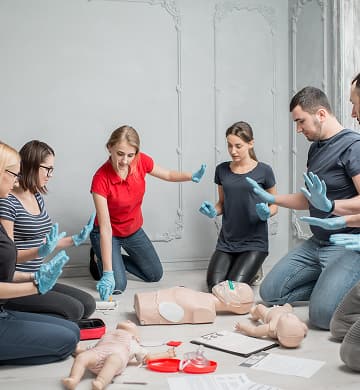
A hands-on, roughly four-hour program built on HSI-certified AVIRT curriculum — so the people already in your building can recognize a threat, make a decision and keep a wounded coworker alive until help arrives.
- HSI Authorized Training Center
- AHA Certified Instructors
- OSHA Outreach Training
- Navy Corpsman Instructor
- Onsite & Online Training
Workplace Active Shooter Training That Goes Past a Slideshow
Many organizations have shown staff a short video and a three-word slogan and called it preparedness. Our active shooter training for employees is a full program: people practice the decisions and physical skills they would need, in the hallways and rooms where they actually work.
The curriculum is Active Violence Immediate Response Training (AVIRT), delivered through our status as an HSI Authorized Training Center. It treats run-hide-fight as a starting point, then adds the parts that slogan leaves out: how to read a situation early, how to choose under stress, and how to control life-threatening bleeding in the minutes before medical help can reach the injured.
If you are building or updating the plan itself — alerts, lockdown rooms, accountability — see our separate active shooter response planning service. This page covers the training your workforce attends.

What the Program Covers
Each module builds on the last, and the session ends with scenario drills that pull them together.
-
Situational awareness
Spotting behavior that is out of place, knowing your exits before you need them, and reporting concerns early instead of quietly worrying.
-
Decision framework
A simple way to judge where the threat is and pick the best option — leave, secure a room, or, as a last resort, act to stop the attacker.
-
Securing a space
Locking, barricading and choosing a defensible position using the doors, furniture and walls in your own building.
-
Stop the Bleed skills
Tourniquet application, wound packing and firm direct pressure, practiced on training gear until hands know the steps.
-
Communicating
What to tell 911, how to alert coworkers, and what to expect when law enforcement enters the building.
-
Scenario drills
Realistic, controlled run-throughs that let people feel the pressure in a safe setting and correct mistakes on the spot.
Who Should Attend
The short answer is everyone who could be on site when something happens. Front desk staff, warehouse associates, teachers, bank tellers, nurses and maintenance techs are the first people on scene in any violent incident — not managers in a conference room.
We do recommend that leaders and anyone with a safety, security or facilities role attend alongside their teams. When supervisors have practiced the same decisions as the people they lead, the plan on paper and the behavior in the hallway line up. No prior medical or tactical experience is needed; the bleeding control portion is taught from scratch.
Industries we adapt it for
Scenarios change with the setting: open retail floors, bank lobbies, school corridors, hotel properties, manufacturing plants and remote energy sites each pose different challenges. Industry versions include AVIRT for K-12 schools, AVIRT for retail and AVIRT for manufacturing, with more on the AVIRT training hub.
Program Details at a Glance
| Item | What to expect |
|---|---|
| Curriculum | AVIRT — Active Violence Immediate Response Training, HSI certified |
| Length | About 4 hours, combining instruction, hands-on bleeding control and drills |
| Where | Onsite at your facility in Texas, Louisiana, Oklahoma, Arkansas or New Mexico; other locations quoted on request |
| Group size | Planned around your rooms and staffing; group discounts start at 10 participants |
| Equipment | We bring training tourniquets, wound-packing trainers and drill supplies |
| Records | Participant roster and course completion details for your files |
Why Bleeding Control Is Part of Active Shooter Training
Traditional programs end the moment people are safe. The hard truth is that injured coworkers may still need help long before paramedics are allowed into a scene that police have not yet secured. Uncontrolled bleeding is one of the main causes of death that a bystander can actually do something about.
That is why every class includes Stop the Bleed hemorrhage control. Participants learn to recognize life-threatening bleeding, apply a tourniquet high and tight on a limb, pack a wound in the neck, armpit or groin where a tourniquet will not work, and hold pressure until relieved. Many clients add bleeding control kits near AED cabinets after the session; we can advise on placement. Our article on Stop the Bleed for the workplace goes deeper.
From First Call to Training Day
-
Needs assessment
A complimentary conversation about your building, headcount, shifts and any past incidents or concerns.
-
Site review
We look at floor plans or walk the space to choose realistic scenarios and drill locations.
-
Scheduling
Sessions are set around shifts — several smaller groups across a day is common for operations that cannot stop.
-
Training
Instruction, bleeding control practice and drills, with time for questions that only make sense in your building.
-
Follow-up
Completion records plus notes on anything we noticed, such as doors that will not lock or unclear assembly points.
OSHA, Liability and Active Shooter Preparedness
Federal OSHA has no standard written specifically for active shooter events. Employers do have a general duty to keep the workplace free of recognized serious hazards, and OSHA treats workplace violence as a recognized hazard in many settings. Several states and industries also set their own expectations, particularly for schools, healthcare and retail. Training does not guarantee any legal outcome, but documented, realistic instruction is a reasonable part of showing that you took the risk seriously.
For broader prevention topics, such as warning signs and reporting, our online workplace violence course is a useful companion that employees can complete before the live session.
Active Shooter Training FAQs
How is this different from run-hide-fight training?
Run-hide-fight gives people three options. AVIRT keeps those options but adds situational awareness, a structured way to decide under pressure, hands-on bleeding control and scenario drills. The result is practice, not just a poster. Our comparison of AVIRT vs traditional training explains more.
Will the drills frighten our employees?
Drills are controlled and explained in advance. We set the intensity to the group — a school staff session is run differently from a security team — and people can step out at any time. Most participants say knowing what to do lowers anxiety.
How long does the class take?
The core AVIRT course runs about four hours. If you want to train several groups, we can run back-to-back sessions in one visit.
Can you train our whole company in one visit?
Usually, yes. Tell us your total headcount and the rooms available, and we will plan a session schedule that keeps the building staffed.
Is there an online option?
Awareness-level topics can be assigned online, but the decision-making drills and bleeding control skills need to be practiced in person, so the AVIRT program itself is delivered live.
Related Training and Reading
- What is AVIRT?The curriculum explained in plain terms.
- Active shooter response planBuild the plan your trained staff will follow.
- CPR and AED certificationPair active violence training with cardiac emergency skills.
- Active shooter training vs AVIRTWhat changed and why it matters.
- All safety classesSee every program we teach.