
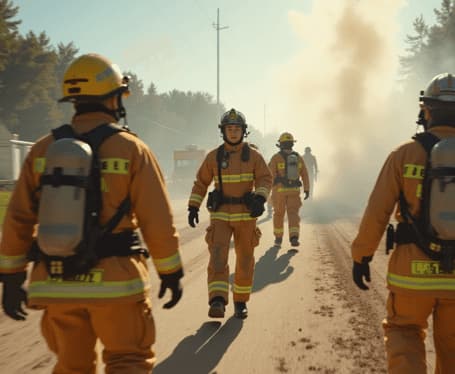
AVIRT for Public Safety
AVIRT Training for Public Safety: Fire, EMS, Dispatch and Emergency Management
Responders are trained to run toward emergencies, but violence can find them first: at the station door, on a medical call or in a crowd at an event. AVIRT training for public safety gives every member of the agency a shared, practiced response.
- HSI Authorized Training Center
- AHA Certified Instructors
- OSHA Outreach Training
- Navy Corpsman Instructor
- Onsite & Online Training
Taught by People Who Wear the Same Gear
Our instructors are not consultants looking in from outside. Founder Brandon S. Beaver serves as a firefighter and Emergency Medical Responder with the Chidester, Arkansas fire department. Travis E. Beaver has worked as a firefighter and Emergency Medical Responder since 2022, after six years on active duty as a U.S. Navy Hospital Corpsman, and teaches TCCC. They understand station life, volunteer rosters and the realities of a rural response area.
Active Violence Immediate Response Training is an HSI course of about four hours. It was designed for the general public, which makes it useful for agencies in two ways: it protects your own people, and it gives them a common language with the businesses, schools and churches they serve.
Why Each Part of the Agency Benefits
-
Firefighters
Scene size-up when a call involves violence, staging decisions and coordinating with law enforcement before entering.
-
EMS crews
Violent patients and bystanders, ambush awareness, and hemorrhage control in austere conditions.
-
Telecommunicators
Giving callers clear, practical guidance on escape, sheltering and bleeding control while units respond.
-
Emergency management
Building community plans, mass casualty preparations and public education programs.
-
Station and admin staff
Front desks and open bays where the public walks in asking for help, or with a grievance.
-
Volunteer departments
Members respond from home and work, and may arrive individually rather than as a crew.
Public Safety Scenarios We Cover
Scenarios are chosen with your chief or training officer so the session builds on what members already know rather than repeating basic first aid.
Violence at the station
Fire stations are designed to be approachable. People walk up with emergencies, drop off items and sometimes arrive in crisis or angry. Members practice recognizing a threat at the door, securing the bay and quarters, and calling for law enforcement.
Calls that turn violent
A domestic disturbance dispatched as a medical call, an agitated patient or a crowd at a scene can change quickly. We revisit scene safety habits and the decision to retreat and stage when something is wrong.
Mass casualty and community events
Parades, ball games and festivals put responders in crowds. Members discuss how an incident would unfold, where bleeding control supplies are, and how to work alongside law enforcement as patients are moved to safety.
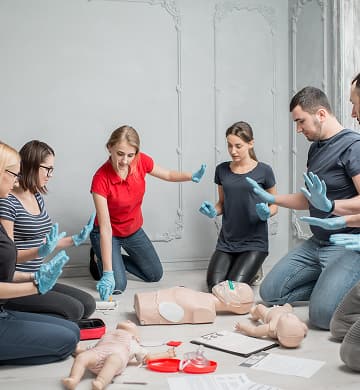
Helping Agencies Teach Their Communities
Many departments field requests from local schools, churches and businesses for active threat education. Personnel who have been through AVIRT can speak to those groups with confidence, and we can coordinate community sessions in partnership with the agency. Schools and city departments in your area may also want their own tailored classes; see our programs for K-12 schools and municipal employees.
Bleeding control in the field also means blood exposure. Agencies should make sure every member is current on bloodborne pathogens training, and civilian staff often add AHA CPR certification.
Planning a Session With Your Training Officer
-
Agree on goals
During the free needs assessment we discuss whether the priority is member safety, station security, community outreach or all three.
-
Match the schedule to shifts
Career departments often split the class across A, B and C shifts; volunteer departments use drill nights or weekends.
-
Invite partners
Law enforcement, dispatch and neighboring departments can attend so everyone hears the same expectations about staging, entry and patient movement.
-
Debrief and apply
We close with a short discussion of what should change in station procedures, call guidance or mutual aid plans, and members leave with HSI completion records.
Public Safety AVIRT FAQ
Our EMTs already know bleeding control. Is AVIRT redundant?
The medical portion will feel familiar, and we move through it quickly with experienced crews. The value is in the decision-making, station security and scenario work, and in learning the same framework the public is being taught.
Can you train volunteer departments in the evening?
Yes. We regularly schedule around drill nights and weekends. Neighboring departments can combine to reach the 10-participant group rate.
How long does it take, and can it count toward continuing education?
The course runs about four hours. Whether it counts toward a member's continuing education hours depends on your state and certifying body, so check with them before the session; we provide HSI completion documentation either way.
Should dispatchers attend in person?
If staffing allows, yes. Hearing the response options in a room full of firefighters and medics helps telecommunicators give callers consistent guidance.
Do you cover tactical medicine?
AVIRT is not a tactical medic course. Travis teaches TCCC, and we can discuss advanced options separately, but this class is built for broad, agency-wide preparedness.
Where can we find general public safety courses?
Our public safety training page lists online courses for agency personnel.