
Cincinnati, Ohio
Safety Training in Cincinnati, OH Along the River and the Freight Lanes
Consumer brands, jet engine work, an air cargo powerhouse across the river and a big medical community. Safety training in Cincinnati, OH touches all of them, and our online courses reach every shift.
Five Pillars of the Cincinnati Workforce
-
Consumer products and chemicals
Mixing, filling and packaging lines handle chemicals and run high-speed equipment. Hazard communication and lockout/tagout come first.
-
Aerospace manufacturing
Machining, testing and assembly of engine components need machine guarding, hearing conservation and PPE.
-
Air cargo and distribution
The airport in northern Kentucky anchors huge sortation and warehouse operations that draw workers from across the metro.
-
Hospitals and research
Academic medicine and children's healthcare bring bloodborne pathogens, patient handling and security needs.
-
River terminals
Barge, bulk and terminal work along the Ohio River involves heavy equipment, fall-into-water risk and confined spaces.
One Metro, Two States, Different Rulebooks
Cincinnati employers on the Ohio side follow federal OSHA, because Ohio does not run a State Plan for private businesses. Cross a bridge to Covington or the airport in Boone County and you are in Kentucky, where KY OSH, a State Plan, covers private employers. If you run sites on both sides, check each state's requirements and keep one consistent training record that satisfies both.
Freight is where many of the region's injuries happen. Sorting buildings and distribution centers run nights, weekends and peak-season surges with large numbers of new hires. Forklifts, tuggers, conveyors and pallet jacks share aisles with people on foot, and repetitive lifting adds up across a shift. Forklift Fundamentals and back safety training give new employees a baseline before supervisors complete hands-on operator evaluations.
Manufacturing remains a large employer as well, from consumer goods to aerospace components. Here the serious hazards are stored energy, unguarded points of operation, noise and chemical exposure. Online awareness modules work well as the first layer; site-specific procedures and practical sign-offs complete the picture.
Hospitals and research institutions round out the metro's largest employers. Clinical staff need bloodborne pathogen training under OSHA 1910.1030, while security and emergency department teams benefit from structured practice responding to violence. Our instructor-led AVIRT course was designed with exactly those first minutes in mind.
Weather plays a role along the river valley: humid summer heat, severe thunderstorms and the Ohio River's history of spring flooding. Facilities near the floodwall or low-lying industrial areas should rehearse how they will move people and equipment if water rises.
Quick Wins for Greater Cincinnati Facilities
- Make sure every forklift operator has both knowledge training and a documented practical evaluation.
- Confirm your Safety Data Sheets are current and employees know where to find them.
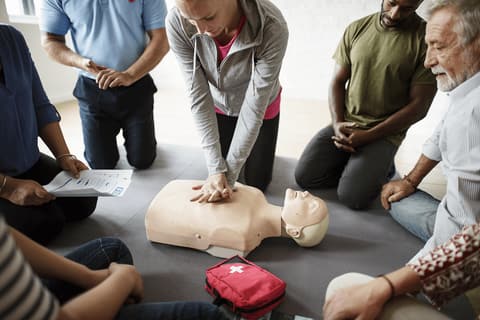
- Train at least a few people per shift in CPR and AED use through our AHA-certified CPR courses.
- Add heat stress awareness before summer peaks in un-air-conditioned buildings.
- Review your severe weather shelter areas and flood plan.
Cincinnati Questions We Hear
Who enforces workplace safety for private employers in Cincinnati?
Federal OSHA, through its area office serving southwest Ohio. Public employers in Ohio are covered by a separate state program.
What training do air cargo warehouse teams need?
Powered industrial truck training, material handling and back safety, hazard communication for any chemicals or batteries, and emergency action plan training.
How should Ohio River businesses plan for flooding?
Know your site elevation relative to flood stages, decide in advance when you will move stock and shut down equipment, and train employees on electrical hazards and contaminated water during cleanup.
Can you run onsite classes in Cincinnati?
Instructor-led sessions in Ohio are quoted on request. Online courses are available immediately on any device.