
New Mexico
New Mexico Safety Training With Instructors Who Come to You
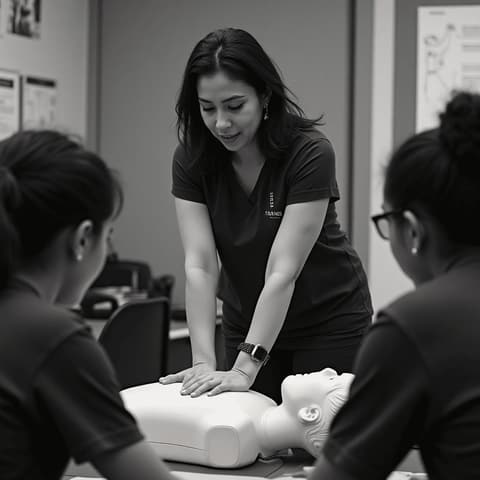
New Mexico is part of our regular onsite service region, so instructors can bring CPR manikins, tourniquets and OSHA Outreach courses straight to your yard, lab or office.
From First Call to Trained Crew
Here is how most New Mexico safety training engagements come together.
-
Free needs assessment
We talk through your sites, from a Permian Basin pad to an office in Santa Fe, and the hazards your people face.
-
Pick the format
Instructor-led sessions at your facility, online self-paced courses, or a blend of both.
-
Schedule around operations
Sessions can be set to fit rotations, shift changes and field schedules.
-
Document everything
Certification cards and completion records give you proof of training for audits and contracts.
New Mexico Safety Rules Come From the State
Unlike Texas, New Mexico operates its own OSHA-approved State Plan. The Occupational Health and Safety Bureau (NM OHSB), part of the New Mexico Environment Department, covers most private and public employers. Its standards must be at least as effective as federal OSHA and may include additional requirements, so confirm any state-specific rule with OHSB as you build your program.
That matters for crews who work on both sides of the Texas line. A driller in Hobbs and a driller in Midland do much the same job, but they answer to different agencies. Our instructors know the federal standards that underpin both programs, and we can help you organize training so it travels well across the border.
Industries We Train in New Mexico
-
Oil and gas
Southeastern New Mexico shares the Permian Basin with West Texas. Crews need first aid, H2S awareness from their operator, confined space and fall protection basics.
-
Research and laboratories
National laboratories and their contractors handle chemicals, radiation and high-voltage systems, where hazard communication and electrical awareness are essential.
-
Mining
Potash and copper operations combine heavy equipment, dust and remote locations.
-
Government and public agencies
State, tribal, county and city employers need CPR, violence preparedness and safe facility practices.
Heat, Wildfire and Monsoon Season
New Mexico weather swings hard. Summer heat in the Chihuahuan Desert around Las Cruces and on southeastern oilfields can push outdoor workers toward heat exhaustion within hours, while higher elevations bring intense sun and dehydration that people underestimate.
Dry, windy spring months set up wildfire conditions in the mountains, and the late-summer monsoon brings sudden storms, lightning and flash flooding in arroyos that can trap vehicles. Field crews should know when to stop work, how to shelter from lightning and why never to drive into running water. Assign our heat stress course before summer and fold storm protocols into your emergency plan.
Choosing a Training Format
| Need | Best fit |
|---|---|
| AHA CPR, AED and first aid certification | Onsite class with hands-on skills check; cards issued same day |
| OSHA 10 or 30 for construction or general industry | Onsite instructor-led or online Outreach course |
| Annual refreshers like HazCom or BBP | Online, assigned to each employee |
| Active violence response | Onsite AVIRT, about four hours, HSI certified |
Group discounts apply from 10 participants.
Why Distance Makes First Aid Skills Critical
Much of New Mexico is wide open country. A lease road in Eddy or Lea County, a ranch-adjacent pipeline right-of-way or a mine site in the southwest can sit a long way from the nearest emergency room. OSHA's first aid standard, 1910.151(b), expects employers to have adequately trained first-aid personnel when an infirmary, clinic or hospital is not in near proximity, and that describes a lot of New Mexico workplaces.
Our instructors teach the skills that matter most in those first minutes: recognizing cardiac arrest and starting high-quality compressions, using an AED, packing a deep wound, and applying a tourniquet correctly. These are taught hands-on, with feedback, because reading about a tourniquet is not the same as tightening one. Brandon Beaver, our founder, still serves as an Emergency Medical Responder and firefighter, and that field experience shapes how our classes are run.
City employers benefit too. Office buildings in Rio Rancho and Albuquerque, schools and retail centers all see sudden cardiac events and serious injuries. Having several trained people per floor or per shift is a simple, high-value investment through our CPR certification training.
New Mexico Training FAQs
Do you travel to Albuquerque and smaller towns?
Yes. New Mexico is one of the states we serve with onsite instructor-led training, including Albuquerque, Las Cruces and rural sites.
Is an OSHA 10 card recognized in New Mexico?
The DOL Outreach card is a national credential. Whether a particular job requires one is set by your employer, project owner or contract, so check those terms.
Do you train tribal, county and municipal employers?
Yes. Public agencies across New Mexico use our CPR, first aid, bloodborne pathogens and active violence courses. Schedules can be built around council meetings, school calendars and seasonal workloads.
Can we mix onsite and online training?
Many clients do: hands-on skills onsite, plus online courses for topics people can complete on their own schedule.
Cities