
Sioux Falls, South Dakota
OSHA and CPR Training in Sioux Falls for Hospitals, Banks and Processing Plants
Two large health systems, national credit card and banking operations, big food processors and a distribution hub at I-29 and I-90. OSHA and CPR training in Sioux Falls covers a surprisingly diverse economy.
Five Priorities for a Sioux Falls Safety Plan
- Clinical staff with blood exposure receive annual bloodborne pathogens training under OSHA 1910.1030.
- Processing lines rotate tasks and train on industrial ergonomics to reduce repetitive strain.
- Branch, call center and lobby staff know how to recognize and respond to a violent intruder.
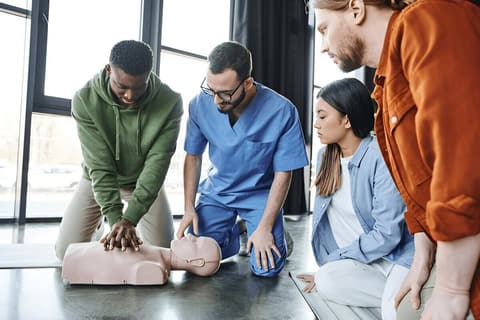
- Every floor and shift has CPR and AED responders with current two-year AHA cards.
- Winter driving and walking hazards are reviewed before the first big storm.
An Economy Bigger Than Its Prairie Setting
Sioux Falls has grown into the largest city in South Dakota on the strength of a few major sectors. Healthcare is the biggest: two large health systems are headquartered here and serve a wide multi-state region. Financial services became a pillar after South Dakota's banking laws attracted national credit card operations, and banks and card issuers still employ thousands in offices and call centers. A large pork processing plant and other food manufacturers sit near the river, and the I-29 and I-90 crossroads makes the city a natural trucking and distribution hub.
Meat and food processing carries some of the highest injury rates in manufacturing. Workers face knives and saws, cold and wet conditions, ammonia refrigeration, sanitation chemicals and fast-paced repetitive work. Lockout/tagout during sanitation, hazard communication, machine guarding and ergonomics are the essentials, backed by strong first aid capability on every shift.
Distribution and trucking firms round out the list. Drivers log long winter miles on interstates where whiteouts and black ice are common, and warehouse teams load and unload trailers around the clock. Driver safety and forklift fundamentals cover the basics for them.
Healthcare workers face workplace violence at rates well above most other industries, along with bloodborne pathogen exposure and patient-handling injuries. Banking and card operations face robbery risk at branches and a constant stream of social engineering and phishing attempts against staff.
Winter is long, with blizzards, extreme cold and ice that make commuting and outdoor work dangerous. Spring and summer storms can bring hail, flooding along the Big Sioux River and occasional tornadoes. South Dakota is a federal OSHA state for private employers.
Sioux Falls Employers and Recommended Training
| Employer | Online courses | Instructor-led (quoted on request) |
|---|---|---|
| Hospitals and clinics | Bloodborne Pathogens, Violence in the Workplace, Back Safety | CPR and AED, AVIRT |
| Banks and card centers | Social Engineering, Phishing, Violence in the Workplace | AVIRT for banks |
| Meat and food processing | Lockout/Tagout, Hazard Communication, Industrial Ergonomics | First aid and Stop the Bleed |
| Distribution and trucking | Forklift Fundamentals, Driver Safety | CPR and AED |
Sioux Falls Training FAQ
What safety training do Sioux Falls meat processing plants need?
Lockout/tagout, machine guarding, hazard communication for ammonia and sanitation chemicals, ergonomics, PPE and slips, trips and falls, plus trained first aid responders.
How can Sioux Falls banks and card centers prepare for violence?
Train every employee to spot warning signs and report concerns, and give branch managers and security hands-on AVIRT practice that includes bleeding control.
Can you deliver CPR classes in Sioux Falls?
Yes, quoted on request. Instructor-led AHA CPR, AED and first aid classes can be scheduled at your site, and online modules are available immediately.
Is Sioux Falls covered by federal OSHA?
Yes. South Dakota has no State Plan, so federal OSHA covers private employers.