South Dakota
South Dakota Workplace Safety Training, East River to West River
Packing plants and banks in Sioux Falls, grain and ethanol across the eastern prairie, and tourism in the Black Hills each need a different approach. Online courses reach every corner of the state immediately.
South Dakota in Five Points
- Private employers are under federal OSHA; South Dakota has no OSHA-approved State Plan.
- Agriculture, food and meat processing, financial services, healthcare, manufacturing and tourism are the major employers.
- Blizzards, extreme cold, summer severe storms and spring flooding define the weather risk.
- Many worksites are rural, with long distances to emergency care.
- Online training is available statewide today; onsite sessions are quoted on request from our Texas headquarters.
East River: Processing, Farming and Finance
East of the Missouri River, the economy is built on corn, soybeans, livestock and the plants that process them. Meat packing and food processing are demanding environments: sharp tools, fast lines, cold and wet floors, ammonia refrigeration and repetitive motion. Effective South Dakota workplace safety training for those plants emphasizes lockout/tagout during sanitation, hand and knife safety, ergonomics and slip prevention.
Ethanol plants and grain elevators carry their own serious risks, including combustible dust, confined spaces, engulfment in grain bins and flammable liquids. Workers who enter bins or tanks need specific procedures from their employer, and our confined spaces course gives them the background to understand why those procedures matter.
Sioux Falls is also a regional hub for banking, credit card operations and healthcare. Large office and call-center populations need emergency evacuation plans, AED responders and preparation for violent incidents. College towns like Brookings add campus safety and research lab needs.
West River: Tourism, Ranching and Remote Work
West of the river, the Black Hills draw large summer crowds to national monuments and parks, while ranching, mining history and the military shape the economy around Rapid City. Hotels, restaurants and attractions hire seasonal staff quickly and need fast onboarding. Large motorcycle rallies and events bring unusual crowd and traffic challenges for local businesses.
Ranch and rural workers often operate miles from the nearest town. For them, first aid, bleeding control and CPR are among the most valuable skills anyone can carry, because help may be a long drive away.
Distance, Response Time and First Aid
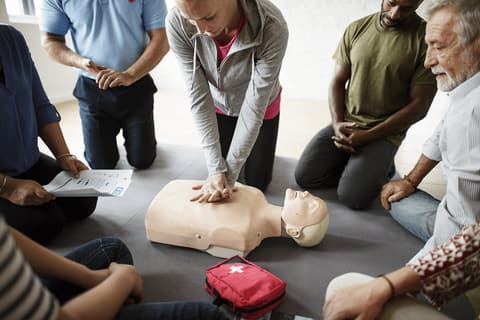
Many South Dakota workplaces sit far from a hospital. On a ranch, a remote stretch of highway or a small-town plant, coworkers may be the only responders for a long time after an injury. Hands-on training in CPR, AED use, bleeding control and basic first aid gives those coworkers the confidence to act instead of waiting. OSHA's first aid standard also expects trained first-aid personnel when medical care is not in near proximity. We recommend at least one certified responder per crew, per shift and per building.
Weather Hazards and How to Prepare
| Hazard | Who is most affected | Preparation |
|---|---|---|
| Blizzards and extreme cold | Truck drivers, livestock workers, utilities, outdoor crews | Cold stress awareness, vehicle winter kits, stop-work rules |
| Severe thunderstorms, hail and tornadoes | Outdoor workers, large metal buildings | Designated shelters, drills, weather alerts |
| Spring flooding | River towns, farms, road crews | Evacuation planning, no driving through water |
| Summer heat | Field crews, processing plants, roofers | Heat stress training, water-rest-shade routines |
Suggested Training for South Dakota Employers
-
Food and meat processing
Lockout/tagout, ergonomics, slips and falls, chemical safety for sanitation crews.
-
Agriculture
Machine guarding, chemical safety, hand tools and first aid for farm operations.
-
Financial services
Emergency planning, AED responders and violence response for offices and branches.
-
Hospitality
Fast onboarding and guest emergency readiness for seasonal teams.
-
CPR and AED
American Heart Association certification for responders on every shift.
How Training Works From Our Texas Base
Safety Is A Mindset is headquartered in East Tawakoni, Texas. South Dakota employers usually begin online: courses run around the clock on phones, tablets and computers, workers can pause and resume, and the system records each completion for your files. That suits processing plants with three shifts and ranch or field crews who check in from the road.
When hands-on practice is needed for CPR and AED certification, Stop the Bleed or the HSI-certified AVIRT active violence program, we can quote an onsite session in South Dakota. Groups of 10 or more qualify for discounted pricing, and each inquiry includes a complimentary safety needs assessment.
South Dakota Safety Training FAQ
Is South Dakota a federal OSHA state?
Yes. Private employers in South Dakota are covered by federal OSHA.
Can meat processing workers take courses in their first week?
Yes. Orientation and hazard-specific courses can be assigned during onboarding and completed on a phone or a breakroom computer.
Do you offer training in Aberdeen?
Online courses are available immediately for Aberdeen employers, and onsite sessions can be priced on request.
Are grain bins covered in your courses?
Our confined spaces course explains the hazards and the permit and rescue concepts behind safe entry. Your operation still needs written bin entry procedures, lockout of unloading equipment and trained attendants.
What winter topics matter most?
Cold stress, slips on ice, carbon monoxide from heaters and generators, safe snow removal and winter driving.
Neighboring States and Related Pages
Cities