

Kansas
Safety Training in Kansas for Aircraft Builders, Packers and Ag Crews
Kansas builds airplanes, processes beef, stores wheat and pumps oil, often under wide-open skies that can turn dangerous fast. We help employers deliver safety training in Kansas that fits each operation, starting online today.
Safety Training in Kansas Under Federal OSHA
Kansas does not operate a State Plan for private employers, so federal OSHA standards apply to private workplaces across the state, from Kansas City suburbs to feedlot towns in the southwest. Federal compliance officers handle inspections and complaint investigations, and the same core standards cover hazard communication, machine guarding, powered industrial trucks and walking-working surfaces.
Kansas employers often juggle very different operations under one roof or one company: a fabrication shop, a grain facility, a fleet of trucks and an office. A practical training program groups people by the hazards they actually face, assigns a common foundation to everyone, and then layers on equipment- and task-specific courses. That approach keeps training relevant and avoids wasting hours on topics that do not apply.
Kansas Industries and Their Training Focus
-
Aviation manufacturing
Wichita’s aircraft and parts plants involve riveting, composites, sealants, overhead work and noise. Hazard communication, hearing conservation and fall protection come first.
-
Meatpacking
Large beef plants in southwest Kansas run on sharp tools, fast lines, cold rooms and ammonia refrigeration systems.
-
Grain storage and farming
Elevators and farms face engulfment, combustible dust, augers, tractors and summer heat.
-
Oil, gas and wind energy
Field crews work around pressurized systems, heavy equipment, heights and long drives between sites.
-
Distribution and trucking
Kansas City and the I-70 and I-35 corridors host warehouses and fleets that need forklift and driver safety programs.
Inside a Kansas Packing Plant
Beef processing is one of the most physically demanding jobs in the state. Workers make thousands of knife cuts per shift on a moving line, often in cold, wet rooms, while sanitation crews clean powerful equipment overnight with hot water and strong chemicals. Ammonia refrigeration systems add the possibility of a toxic release that every employee must know how to respond to.
Training that works in this environment is short, frequent and practical. Our industrial ergonomics course addresses repetitive strain, while lockout/tagout training protects sanitation and maintenance crews who reach into equipment. Evacuation drills for an ammonia release, run with the same seriousness as a tornado drill, round out the plan.
A Tornado Plan Kansas Workers Will Actually Follow
Kansas sits in the heart of tornado country, and a plan on paper is not enough. These steps turn it into a habit.
-
Choose and mark shelter areas
Pick interior rooms, restrooms or hallways on the lowest floor, away from windows and wide-span roofs, and label them clearly.
-
Decide who calls it
Name the person on each shift who monitors warnings and gives the order to shelter, plus a backup.
-
Account for everyone
Use a headcount method that includes visitors, contractors and truck drivers waiting at the dock.
-
Drill every season
Practice on all shifts each spring. Our emergency and fire preparedness course supports the classroom side.
-
Plan the aftermath
Know how you will check for injuries, gas leaks and structural damage before anyone moves through a damaged building.
Heat, Cold and Prairie Fire
Kansas summers bring long stretches of heat for harvest crews, roofers and warehouse staff, and humid days in the east can be just as punishing as dry heat in the west. Assign heat stress training before the wheat harvest and make sure supervisors know how to respond to heat stroke.
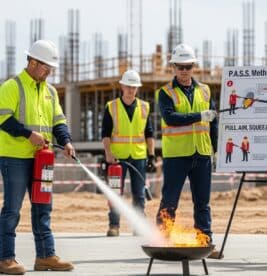
Winter adds blizzards, ice and dangerous wind chills, especially for drivers and anyone working outdoors on the plains. In dry, windy periods, grass fires can spread quickly across rural areas, so remote facilities should keep evacuation routes and extinguishers ready and know how they will get word of a fire nearby.
Starting Points by Kansas Job Role
| Role | Recommended courses |
|---|---|
| Aircraft assembly and fabrication | Hazard communication, hearing conservation, hand and power tools, ladder safety |
| Packing plant production and sanitation | Industrial ergonomics, slips and falls, lockout/tagout, chemical safety |
| Elevator and farm workers | Confined spaces, lockout/tagout, heat stress, PPE fundamentals |
| Oil field and wind technicians | Personal fall arrest, compressed gas safety, electrical awareness, first aid |
| Supervisors in any sector | OSHA 30, CPR/AED certification, workplace violence awareness |
Kansas Safety Training FAQs
Is Kansas covered by federal OSHA?
Yes. Private employers in Kansas fall under federal OSHA, since the state does not run a private-sector State Plan.
Which Kansas cities do you serve?
Every part of the state. We support employers in Wichita, Topeka and Overland Park, as well as rural plants and farms.
Can your instructors come to Kansas?
Yes, by request. Our trainers are based in East Tawakoni, Texas, so Kansas onsite sessions for CPR, Stop the Bleed or AVIRT are quoted individually. Online courses are available immediately.
What OSHA card should our Kansas workers get?
Do you train school staff in Kansas?
Yes. Our AVIRT program for schools helps teachers and staff respond to active violence and control bleeding until help arrives.
Nearby States and Related Training
Cities