
Maryland
Maryland Workplace Safety Training Under MOSH
From labs along the I-270 corridor to the Port of Baltimore and Eastern Shore farms, Maryland employers face a wide range of hazards and their own state rules. Our Maryland workplace safety training helps you keep up, starting online the day you enroll.
Maryland Workplace Safety Training at a Glance
| Topic | What to know |
|---|---|
| Regulator | Maryland Occupational Safety and Health (MOSH), an approved State Plan within the Maryland Department of Labor, covers most private and public employers. |
| Standards | MOSH adopts federal standards and can add its own, so check state rules before relying on federal interpretations. |
| Heat | Maryland adopted a state heat stress standard in 2024 that calls for a heat illness prevention plan and employee training when heat conditions reach set thresholds. |
| Weather | Summer heat and humidity, coastal storms, nor’easters, winter ice and flooding around the Chesapeake Bay. |
| Major sectors | Federal contracting, life sciences, healthcare, the port and logistics, construction, seafood and poultry. |
Summary for orientation only. Confirm current requirements with MOSH or a qualified advisor.
Why Maryland Employers Pay Close Attention to Heat
Maryland is one of a small number of states that has written its own rule for heat. Under the state standard, covered employers are expected to evaluate heat conditions, provide water, shade and rest, acclimatize workers, and train both employees and supervisors on heat illness. That makes heat stress training a core part of Maryland workplace safety training, not just a summer reminder.
Our online heat stress course gives workers a clear foundation: how the body handles heat, early symptoms, the difference between heat exhaustion and heat stroke, and what to do while waiting for help. Pair it with your written plan and a short site briefing on where water, shade and cooling are located, and you have training employees can act on.
The rule reaches beyond construction. Warehouses without air conditioning, commercial kitchens, landscaping crews, poultry houses and shipyards all see dangerous heat during humid Maryland summers.
Training Priorities by Maryland Sector
-
Life sciences and research
Labs in Rockville, Gaithersburg and Frederick handle chemicals, compressed gases and biological agents.
-
Port of Baltimore and logistics
Terminal and warehouse crews need forklift, dock safety, heat and material-handling training.
-
Construction
Busy commercial and infrastructure markets keep fall protection and OSHA Outreach cards in demand.
-
Hospitals and health systems
Clinical staff need bloodborne pathogens training, CPR certification and workplace violence preparedness.
-
Seafood and poultry
Processing on the Eastern Shore brings knives, cold rooms, wet floors and repetitive work.
-
Government contractors and offices
Office ergonomics, emergency evacuation, cybersecurity awareness and active violence response.
Lab Safety Essentials for Maryland Biotech Employers
Research and biomanufacturing are central to Maryland’s economy. Every lab training plan should cover:
- Chemical safety and hazard communication, including labels, safety data sheets and storage compatibility.
- Compressed gas cylinder handling, securing and transport.
- Bloodborne pathogens training for anyone working with human blood, tissues or cell lines.
- Respiratory protection where fume hoods or engineering controls are not enough.
- Emergency procedures for spills, exposures and evacuations, practiced with the whole team.
- Clear onboarding for interns, visiting scientists and contractors, who often work in labs before they know where eyewash stations, showers and spill kits are located.
- A schedule for refreshers when new chemicals, instruments or procedures are introduced, rather than waiting for an annual review.
Online Now, Onsite by Request
Maryland employers can enroll workers in our online safety classes immediately. Courses run around the clock on any device and record completions for every employee, whether they work in Baltimore, Rockville or Annapolis.
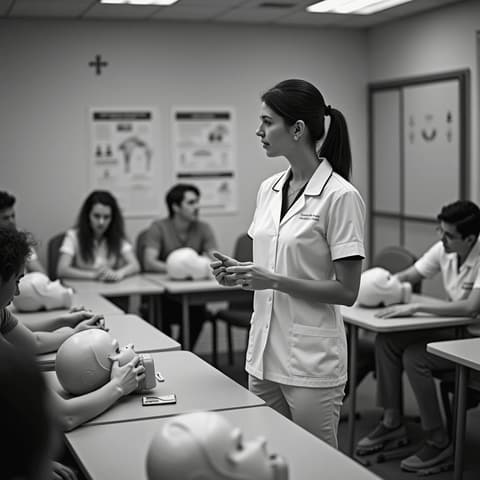
Because our instructors are based in Texas, Maryland onsite sessions for CPR, Stop the Bleed or AVIRT are quoted on request. Groups of 10 or more receive team pricing, and every inquiry starts with a complimentary safety needs assessment.
Maryland Employer FAQs
Who enforces workplace safety in Maryland?
MOSH, Maryland’s State Plan, covers most private and public employers. Some workplaces, such as certain federal facilities, remain under federal OSHA.
Does your heat course satisfy the Maryland heat standard?
It covers the core training topics on heat illness. The state rule also expects a written plan and site-specific measures, so use the course alongside your own procedures and confirm details with MOSH.
Can construction workers in Maryland take OSHA 10 online?
Yes. Our OSHA 10 Construction course is online and issues an official Department of Labor card. Supervisors can take OSHA 30.
Which courses help a Maryland office or contractor headquarters?
Office-based teams usually start with office ergonomics, emergency and fire preparedness, phishing and social engineering awareness, and workplace violence prevention. A few CPR-certified responders per floor round out the program.
How should Maryland employers prepare for coastal storms?
Write down who decides to close, how employees are notified, what gets secured, and how buildings near the Bay or tidal rivers are checked for flooding and damage before work resumes. Review it with staff each year before storm season.
Do you train Frederick and western Maryland employers?
Yes. We support teams in Frederick and throughout the state online.
Nearby States and Related Pages
Cities