
Biotech, Labs and Healthcare
Biotech and Healthcare Safety Training for Labs and Clinics
Exposure control, chemical handling and emergency response courses for researchers, clinical teams and the support staff around them, available online around the clock.
Safety Training Built Around Biological and Chemical Work
Research labs, contract manufacturers, diagnostic facilities and outpatient clinics share a hazard profile that office-oriented training rarely addresses: human blood and tissue, cell lines, solvents and reagents, cryogenic and pressurized gases, sharps, and the occasional agitated patient or visitor. Biotech and healthcare safety training has to reach very different people, from a bench scientist on a grant deadline to the receptionist who checks patients in.
Safety Is A Mindset offers self-paced online courses that cover the awareness side of those risks, plus in-person CPR and bleeding control sessions when your team needs hands-on practice. Staff can complete modules between experiments or patient appointments, on a workstation or a phone, and supervisors get completion records without chasing sign-in sheets.
Common Hazards and the Rules Behind Them
These federal standards drive most lab and clinic training programs. Your EHS lead or biosafety officer owns the site-specific procedures; our courses support the general awareness portion.
| Hazard | Key reference | Online course |
|---|---|---|
| Blood, body fluids, sharps | OSHA 29 CFR 1910.1030 (training at assignment and at least annually) | Bloodborne Pathogens |
| Lab chemicals and reagents | OSHA Laboratory Standard, 29 CFR 1910.1450 (chemical hygiene plan) | Chemical Safety |
| Labels and safety data sheets | OSHA Hazard Communication, 29 CFR 1910.1200 | Hazard Communication |
| Gas cylinders and cryogens | OSHA compressed gas requirements and CGA guidance | Compressed Gas Safety |
| Hazardous waste streams | EPA Resource Conservation and Recovery Act (RCRA) | RCRA Awareness |
| Aerosols and fumes | OSHA Respiratory Protection, 29 CFR 1910.134 | Respiratory Protection |
Respirator users also need medical clearance and fit testing, which must be done in person under your written program.
Who Takes What
-
Lab technicians
Chemical safety, compressed gas handling and RCRA waste awareness, plus bloodborne pathogens if they handle human-derived material.
-
Nurses and clinical staff
Annual bloodborne pathogens, back safety for patient handling, and violence awareness for tense encounters.
-
Researchers and scientists
Hazard communication and respiratory protection, especially in groups working with volatile solvents or powders.
-
Facilities and EHS
Lockout/tagout, electrical safety awareness and confined spaces for the people who maintain freezers, autoclaves and HVAC.
-
Front desk and admin
Violence in the workplace, office ergonomics and cybersecurity basics for staff who manage patient records and visitors.
Hands-On Emergency Skills for Clinical and Lab Teams
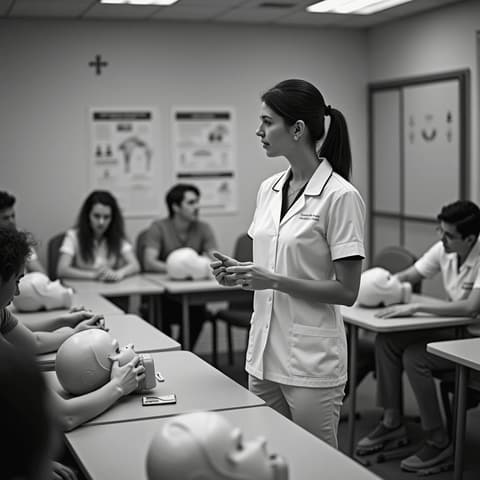
When a patient goes into cardiac arrest in a waiting room or a researcher is cut by broken glassware, the response needs to be automatic. We teach American Heart Association CPR, AED and first aid in person, with a two-year certification card. Stop the Bleed sessions add tourniquet and wound-packing practice for severe injuries.
Our founder is an active Emergency Medical Responder and firefighter, and his son Travis served as a U.S. Navy Hospital Corpsman, so emergency content is taught by people who have done it on real patients, not only on manikins. For campuses concerned about targeted violence, our AVIRT program for biotech facilities adds scenario practice for an armed intruder.
Building a Year of Lab and Clinic Training
-
Before first contact
New hires finish bloodborne pathogens and hazard communication before handling specimens, patients or chemicals.
-
When projects change
Assign chemical, gas or waste refreshers when a team adopts a new reagent, cylinder type or waste stream.
-
Annual exposure control
Schedule the yearly bloodborne pathogens refresher on a fixed month so no one lapses.
-
Before inspections and audits
Pull completion reports by department so documentation is ready when an auditor or accreditor asks.
Lab and Clinic Training FAQ
How often is bloodborne pathogens training required?
Under 29 CFR 1910.1030, employees with occupational exposure need training at initial assignment, at least annually after that, and when tasks change in a way that affects exposure. The training must also give employees a chance to ask questions of someone knowledgeable, so plan a way to answer site-specific questions alongside the online course.
Does OSHA have a laboratory standard?
Yes. 29 CFR 1910.1450 covers occupational exposure to hazardous chemicals in laboratories and requires a written chemical hygiene plan and employee training. Our chemical safety course supports general awareness; your chemical hygiene officer covers your specific plan.
Can healthcare safety training be completed online?
Awareness topics work well online. CPR certification, respirator fit testing and practice with your own equipment need to happen in person.
What safety training do lab technicians need?
Most technicians need hazard communication and training on your chemical hygiene plan, plus bloodborne pathogens if they handle human blood, tissue or cell lines. Depending on the bench, add compressed gas handling, hazardous waste awareness, respiratory protection and emergency procedures such as eyewash and shower use. Biosafety training for specific agents comes from your institutional biosafety program.
Do you train small clinics as well as larger research sites?
Yes. A small practice can enroll a handful of staff online, and group pricing applies from ten participants.
Related Pages
- Bloodborne pathogens trainingExposure control training in more depth.
- AVIRT for biotechActive violence response for labs and research campuses.
- Public safety trainingCourses for EMS, fire and law enforcement teams.
- Higher education safetyTraining for university labs and faculty.
- All industriesExplore every sector we train.