
Passaic County
Paterson Safety Training for the Silk City's Working Floors
Paterson was planned as an industrial city at the Great Falls of the Passaic, and manufacturing, food distribution and small factories still employ much of its workforce. Machines and floods are its defining hazards.
Paterson Shop and Warehouse Self-Audit
Small and mid-sized employers in Passaic County can use this list to find their biggest gaps:
- Point-of-operation guards are in place on presses, saws, slicers and mixers, and workers know why they must not be bypassed, as covered in machine guarding training
- Anyone who cleans, adjusts or repairs equipment follows a written lockout/tagout procedure
- Chemical containers are labeled and safety data sheets are available in a language workers read
- Forklift operators in food and produce warehouses are trained and evaluated
- Your emergency plan includes what to do when the Passaic River floods
- A trained CPR/AED responder is on every shift
Safety Training Rooted in an Industrial City
Founded around the water power of the Great Falls, now a national historical park, Paterson became famous as the Silk City for its textile mills and later for locomotive and aircraft-engine production. That heavy-industry era has passed, but the city's economy still leans on making and moving things. Garment, plastics, metal and food manufacturers occupy older industrial buildings, wholesale food distributors supply restaurants across North Jersey, and a large medical center, schools and a busy retail district round out employment.
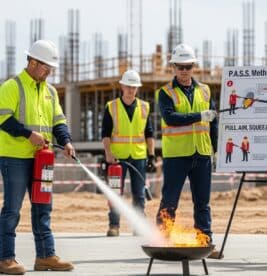
Older facilities can hide older hazards: guards removed decades ago, tight aisles, narrow stairs and electrical systems never designed for modern loads. Paterson safety training should focus on machine guarding, energy control, electrical awareness and safe material handling, along with fire extinguisher use and evacuation in multi-tenant buildings.
Flooding is the local wild card. The Passaic River has a long history of overflowing its banks, and heavy rain from tropical storms can push water into low-lying businesses quickly. Emergency plans should cover shutting down equipment, moving chemicals and inventory, evacuating safely, and returning to a building that may have electrical damage or contamination.
Paterson's workforce is remarkably diverse, with many languages spoken on shop floors. Online modules that employees can repeat at their own pace, followed by hands-on walkthroughs by supervisors, tend to work better than a single lecture.
Private employers in New Jersey fall under federal OSHA; PEOSH covers public employees. Online courses start immediately for Paterson teams, and onsite sessions are quoted on request.
Paterson Industries and Course Plans
| Industry | Start with | Then add |
|---|---|---|
| Garment, plastics and metal shops | Machine guarding, LOTO | Hearing conservation, hand and power tool safety |
| Food wholesale and processing | Forklift fundamentals, slips and falls | Food industry chemical safety, cold stress |
| Hospital and clinics | Bloodborne pathogens | CPR/AED certification |
| Retail and small business | Workplace violence awareness | Fire extinguisher safety, first aid |
Paterson Training FAQ
Can online courses help a multilingual workforce?
Self-paced modules let workers pause and repeat sections. Pair them with supervisor-led walkthroughs in the languages your crew speaks for the best results.
What should we do after a flood before restarting machines?
Treat equipment as potentially hazardous until inspected: electrical damage, contamination and shifted stock are common. Use lockout/tagout during cleanup and repairs.
Do group discounts apply to small businesses?
Discounts begin at 10 participants, and every inquiry includes a free safety needs assessment.