Emergency Preparedness
Workplace Emergency Preparedness Checklist
Grab a pen. This workplace emergency preparedness checklist is built to be worked through, not just read. Mark each item done, partial or missing, and assign an owner to every gap.
How to use this checklist
Walk the site with this list rather than filling it in at a desk. Bring the person who maintains your emergency plan, a supervisor from each shift and someone from facilities. For every item, note one of three states: in place, partial or missing. Anything not fully in place gets a name and a due date.
If you need help deciding which emergencies to plan for in the first place, read our strategic overview of emergency preparedness first, then come back here.
1. Written plan and documents
- A written emergency action plan that covers the emergencies most likely at your site
- Procedures for reporting fires and other emergencies
- Evacuation procedures, exit route assignments and floor plans posted where people can see them
- Procedures for employees who stay to operate critical equipment before evacuating
- A method to account for every employee, visitor and contractor after evacuation
- Shelter-in-place procedures for severe weather or outside hazards
- Names or job titles of people who can explain the plan
- A copy of the plan accessible off site and on mobile devices
A note on OSHA 1910.38
OSHA's emergency action plan standard, 29 CFR 1910.38, applies when another OSHA standard requires an emergency action plan, which is common, for example where portable fire extinguishers are provided and employees are expected to evacuate rather than fight fires. It lists minimum elements, most of which appear in section 1 above. Employers with 10 or fewer employees may communicate the plan orally instead of in writing. If you are in a State Plan state, check for additional state requirements.
2. Roles and coverage
- An emergency coordinator and a named backup
- Floor or area wardens for each zone, with backups
- A designated person on every shift to call 911
- A designated person to meet responders at the correct entrance
- Trained first aid and CPR responders on every shift and in every work area
- Coverage for nights, weekends, holidays and planned absences
- A buddy system for employees who may need help evacuating
3. Facilities and equipment
- Exit routes clear, marked and lit; doors open in the direction of travel where required
- Fire extinguishers mounted, accessible and inspected on schedule
- First aid kits stocked, sealed and checked monthly
- AEDs visible, unlocked, with in-date pads and a working status light
- Bleeding-control kits near high-risk work and gathering areas
- Eyewash or drench stations where corrosive chemicals are used
- Emergency lighting and alarm systems tested
- Utility shutoffs labeled and their locations documented
4. Communication
- An alarm or notification method that reaches everyone, including noisy and remote areas
- A current employee contact list with an owner responsible for updates
- Instructions for visitors, contractors and customers on what to do
- A predetermined assembly area and an alternate
- A plan for communicating with families, media and customers after an incident
- Contact details for local fire, EMS, police and utilities posted near phones
5. Training
- New-hire orientation that covers the plan, exits and assembly points
- CPR, AED and first aid certification for designated responders
- Bleeding-control skills for responders and staff in high-risk areas
- Violence preparedness such as AVIRT where appropriate
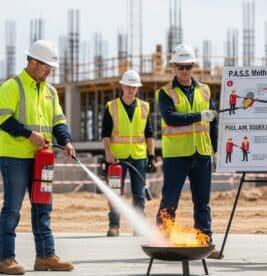
- Fire extinguisher use for employees expected to use them
- Refresher training scheduled, and expiration dates tracked
6. Drills and exercises
- At least one evacuation drill per year, more often for higher-risk sites or where rules require it
- A scenario drill for each high-priority emergency (medical, fire, weather, violence)
- Drills on off-shifts, not only on day shift
- A written debrief after every drill with findings and owners
- Corrective actions tracked to completion
7. Review and update
- Full plan review at least once a year
- Updates after any layout, staffing, process or equipment change
- Updates after every incident, near miss or exercise
- Version date shown on the plan, with old copies removed
8. Special situations
These are easy to overlook because they do not apply every day.
- Lone workers and remote crews have a check-in routine and a way to call for help
- Company vehicles carry first aid kits and, where risk warrants, bleeding-control kits
- Contractors on site are briefed on alarms, exits and assembly points
- Events, open houses or large deliveries that change normal traffic are planned for
- Heat illness procedures are in place for outdoor or hot indoor work
Prioritizing what you found
Most first-time walk-throughs produce a longer list of gaps than anyone expected. Do not try to fix everything at once. Start with items that affect life safety in the first minutes of an emergency: blocked exits, missing or expired AED pads, no trained responder on a shift, and alarms that cannot be heard in part of the building. Next, address roles and communication, because they make every other part of the plan work. Training, drills and documentation improvements can then be scheduled over the following weeks.
Record your results with the date so you can compare next year's walk-through against this one and show progress to leadership.
The gaps we find most often
During site walk-throughs, the same problems show up again and again.
-
Unread plan
The plan exists, but supervisors cannot describe what it says.
-
Unchecked equipment
An AED with expired pads or a kit missing its tourniquet.
-
Day-shift only
Drills and training never reach nights or weekends.
-
Visitors forgotten
No one is assigned to guide customers or contractors out.
Checklist questions
How long does a full checklist review take?
For a single building, a few hours with the right people. Multi-site organizations should review each site separately.
Can you review our plan with us?
Yes. Our complimentary safety needs assessment is a good starting point, and our onsite training service can include a walk-through of exits, AEDs and kits.
What training should we schedule first?
Usually CPR/AED and first aid for responders on every shift, followed by the emergency your risk assessment ranked highest.