CPR & First Aid
CPR Certification Renewal: How Often and What to Expect
Most cards are good for two years. The hard part of CPR certification renewal is not the class, it is remembering the date before it passes.
How long does CPR certification last?
For the major US programs, the answer is two years. American Heart Association courses such as Heartsaver CPR AED and BLS issue a card that is valid for two years from the course date, and the American Red Cross uses the same window for its CPR and AED certifications. The expiration is printed on the card or eCard, usually as a "recommended renewal" month.
The clock starts on the day you finished the class, not the day you downloaded or received the card. If your employer, licensing board or insurer sets a shorter cycle, theirs is the one that counts for your job.
Renewal at a glance
| Question | Typical answer |
|---|---|
| Validity of an AHA or Red Cross CPR card | Two years |
| Best time to schedule renewal | Two to six months before the expiration month |
| Can renewal be fully online? | Not for AHA certification; a hands-on skills check is required |
| Is there a grace period? | Policies differ by provider and employer; do not assume one exists |
| What if the card already expired? | Expect to take the full course rather than a shorter update |
What a renewal class looks like
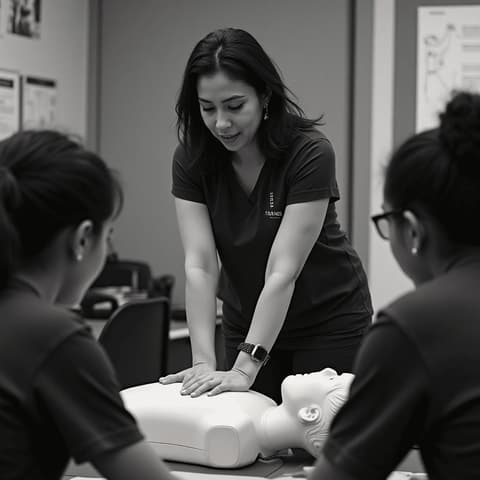
A renewal session assumes you already know the sequence. Instead of starting from zero, the instructor moves quickly through the assessment steps, then spends most of the time on your hands. Expect to:
Rebuild compression quality
Feedback manikins show depth, rate and full chest recoil in real time. Most returning students discover their rate has drifted or their depth is shallow, and a few cycles of coaching corrects it.
Catch up on guideline changes
Resuscitation science is reviewed and the guidelines are updated periodically. Renewal is your chance to learn any changes to sequence, ratios or AED use, rather than relying on what you remember from years ago.
Run a full scenario and skills test
You will typically complete a skills check from recognition through AED use, and some courses include a written test. Pass both and a new card is issued with a fresh two-year date. In our AHA CPR classes, cards are issued the same day.
If your card has already lapsed
An expired card is common and fixable, but it changes your options. Many providers only allow the shorter renewal format while a card is still current. Once it has passed, you may need the full initial course, which takes longer. For employees, the bigger issue is that many employers treat an expired card as no certification at all, which can pull someone off a responder roster or a job that requires current CPR.
If you realize your date is close, call your training provider now and ask about their policy. A few weeks of planning is far easier than explaining a coverage gap after an incident.
Can you renew CPR online?
Online learning has a place, but it does not replace the skills check. The AHA does not accept online-only courses for certification; its blended option pairs online coursework with an in-person hands-on session. OSHA's first-aid training guidance likewise emphasizes hands-on practice. If a website promises an instant CPR card with no skills session, ask whether your employer will accept it before you pay.
Between certifications, a self-paced online CPR course or our first aid overview is a good way to keep knowledge fresh for staff who are not designated responders.
A renewal tracker for employers
If more than a handful of people on your team hold CPR cards, keep a simple tracker. A spreadsheet works fine. Record:
- Employee name, role, shift and work area
- Course type (CPR/AED, first aid, BLS) and training provider
- Completion date and expiration month
- Date the renewal class is booked
- Whether that person is on your emergency responder list
Avoiding the renewal cliff
When a company certifies everyone in one big session, everyone expires in the same month two years later. If that month collides with a busy season, renewals slip and coverage collapses. Staggering helps: split your responders into two or three groups and renew them on different cycles so you never lose all coverage at once.
Review the tracker every quarter, and pull it into your broader safety training plan so CPR does not live in a separate silo.
Onsite renewal simplifies the logistics. Rather than sending employees to public classes one by one, our instructors bring manikins and AED trainers to your facility through our onsite safety training service. The group renews together, practices with your real AED location, and you leave the day with confirmed records. Groups of 10 or more qualify for group pricing.
Mistakes that cause lapsed cards
- Nobody owns the tracker, so expiration dates are discovered after the fact
- Booking renewal in the final week, with no backup date if someone is sick
- Paying for an online-only certificate that the employer later rejects
- Renewing the card but skipping a walk-through of where the AED and first aid kits actually are
- Forgetting night and weekend staff when the class is scheduled for day shift
Renewal questions we hear often
Do I have to take the same course I took last time?
Not necessarily. If your job changed, for example moving into a clinical role that requires BLS, renew at the level your new role calls for.
Can my employer require renewal more often than every two years?
Yes. Employers, insurers and licensing boards can set stricter schedules, and some high-hazard sites run annual skills refreshers.
Is first aid renewed on the same schedule?
AHA first aid cards are also valid for two years, so many employers renew CPR and first aid together.