
Durham and the Research Triangle
Durham Safety Training for Labs, Clinics and Campus Teams
Durham safety training starts with the people who handle samples, solvents and patients. We pair focused online modules with hands-on CPR and active violence sessions for research and healthcare employers.
From Tobacco Warehouses to Biotech Benches
Durham traded its tobacco factories for research a long time ago. Today a major private research university and its health system sit at the center of the city, Research Triangle Park sprawls along its southern edge, and old brick warehouses downtown now hold startups and lab space. North Carolina Central University adds another campus workforce.
That economy creates a specific hazard profile: biological materials, hazardous chemicals, compressed gases, sharps and patient handling, plus the security challenges that come with open campuses and busy emergency departments.
Regulators you will deal with
Private employers in Durham fall under the NCDOL OSH Division, the state's OSHA-approved plan. Labs that generate hazardous waste also answer to environmental rules, which is why many add our RCRA awareness course alongside chemical safety.
Weather that interrupts research
Remnants of Atlantic hurricanes, summer thunderstorms and the occasional winter ice event can knock out power. Freezers, fume hoods and gas systems need a plan for outages, and employees need to know it before the lights go off.
Matching Durham Roles to the Right Courses
A simple way to assign training across a lab or clinical organization:
| Role | Core training | Add when relevant |
|---|---|---|
| Bench scientists and lab techs | Chemical Safety, Hazard Communication | Compressed Gas Safety, Respiratory Protection |
| Clinical research coordinators, phlebotomists | Bloodborne pathogens training | AHA CPR and AED |
| Facilities and environmental services | Lockout/Tagout, Slips, Trips and Falls | Confined Spaces, Electrical Safety |
| Campus security and front desk | Violence in the Workplace | AVIRT for biotech and healthcare |
| Office and data staff | Office Ergonomics, Phishing | Ransomware, Using Strong Passwords |
OSHA 1910.1030 covers any employee with reasonably anticipated exposure to blood or other potentially infectious materials, including many research roles.
Rolling Out Training Across a Durham Campus or Lab
-
Map exposures
List who touches chemicals, biologicals, patients or the public. Our free needs assessment helps with this.
-
Enroll online first
Assign the awareness modules so everyone has the same foundation, on any shift.
-
Add hands-on sessions
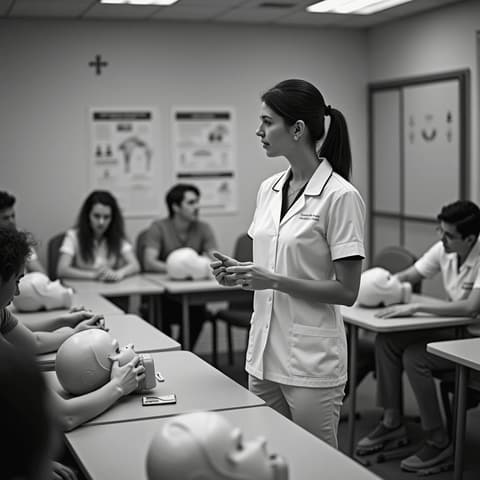
CPR skills checks and AVIRT drills are quoted for Durham sites on request.
-
File the records
Download completion records and set renewal reminders, such as the two-year AHA card cycle.
Security on Open Campuses and in Busy Clinics
Research parks and university medical centers are designed to be welcoming, which also makes them hard to secure. Badged doors help, but staff in lobbies, emergency departments and shared lab buildings are the ones who first notice a person in crisis or a threat that is escalating.
Our active shooter and AVIRT training gives those employees a decision-making framework instead of a slogan. The HSI-certified session runs about four hours and blends recognition of warning signs, choices about moving, locking down or confronting, and Stop the Bleed hemorrhage control with tourniquets and wound packing. Scenario drills are adapted to the floor plans people actually work in, whether that is a vivarium corridor or a clinic waiting room.
For large Durham organizations, a common pattern is to put every employee through the online Violence in the Workplace module, then schedule AVIRT for security, nursing leadership and lab managers who will guide others in the first minutes.