
Massachusetts
Massachusetts Safety Training for Hospitals, Labs and Job Sites
Massachusetts runs on medicine, research, education and construction, with a working waterfront and long winters in the mix. Our Massachusetts safety training gives each of those workplaces a focused, documented program that starts online.
Who Regulates Massachusetts Workplaces
Private employers in Massachusetts fall under federal OSHA. The state’s own program, run through the Department of Labor Standards, covers state and municipal employees rather than private businesses. So a hospital network, a biotech startup or a general contractor in Massachusetts follows federal standards and answers to federal inspectors, while a city water department follows the state public-sector program.
Either way, the training fundamentals are the same: identify the hazards in each job, train people on them in language they understand, refresh the training when conditions change and keep records you can produce on request. Our online platform covers the last two automatically by tracking every completion by employee, course and date.
Top Questions From Massachusetts Employers
Is Massachusetts a federal OSHA state?
For private employers, yes. The state program covers only public-sector workers.
Do you offer a discount for hospital or campus departments?
Yes. Group pricing applies from 10 participants, and departments can be combined under one enrollment so a whole facility trains together.
Which cities do you support?
Employers across the Commonwealth, including Boston, Worcester, Springfield and Lowell.
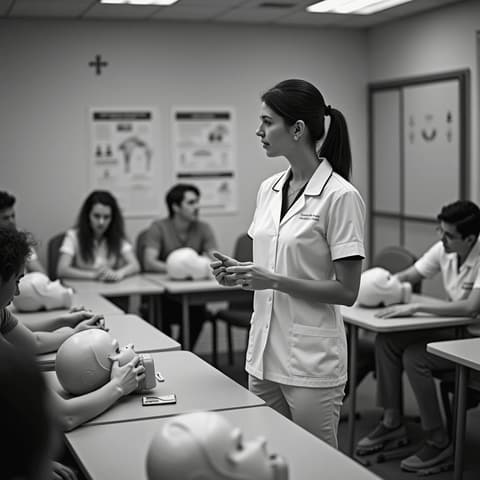
Can you deliver CPR or AVIRT in person in Massachusetts?
Yes, by request. Our instructors are based in Texas, so Massachusetts onsite sessions are quoted to your dates and headcount. Online courses are available immediately.
Massachusetts Sectors and Training Focus
-
Hospitals and clinics
Bloodborne pathogens, safe patient handling, CPR certification and workplace violence preparedness for clinical and support staff.
-
Life sciences labs
Chemical and biological hazards, compressed gases, respiratory protection and emergency spill response.
-
Colleges and universities
Large campuses need active violence response, first aid responders and evacuation plans for crowded buildings.
-
Construction
Steady commercial and residential building keeps fall protection, ladders and OSHA Outreach cards in demand.
-
Fishing and the waterfront
Commercial fishing and seafood processing face cold water, deck machinery, slippery surfaces and long, fatiguing shifts.
-
Technology and professional services
Office ergonomics, emergency evacuation and cybersecurity awareness keep knowledge workers safe and alert.
Healthcare and Research Set the Pace
Massachusetts has one of the most concentrated healthcare and life sciences economies in the country. Teaching hospitals, community health centers, long-term care facilities and research labs all employ large numbers of people who work around blood, body fluids, sharps, chemicals and sometimes agitated patients or visitors.
For these employers, safety training in Massachusetts usually starts with bloodborne pathogens awareness for anyone with potential exposure, followed by chemical safety for lab and environmental services staff. Workplace violence prevention matters too: healthcare workers face a higher risk of assault than most occupations, and training on warning signs, de-escalation and reporting helps protect them.
When it comes to emergencies, every facility benefits from more people who can perform CPR and use an AED, not just clinical staff. Our American Heart Association certification courses are a natural fit for administrative, facilities and security teams.

Getting Through a Massachusetts Winter Without Injuries
Snow, ice and nor’easters cause a steady stream of workplace injuries across the state. A winter checklist for employers:
- Train staff on slip and fall prevention: footwear, short steps, using handrails and reporting icy patches.
- Assign responsibility for clearing and treating walkways, entrances and parking lots before each shift starts.
- Brief outdoor crews and delivery drivers on cold stress, frostbite and hypothermia warning signs.
- Review snow removal safety for roof work, snow blowers and plows, all common sources of serious injuries.
- Refresh driver safety habits before the first storm for anyone who drives for work.
- Plan for coastal flooding and power outages during major storms, including how you will reach employees.
Putting Your Massachusetts Safety Training Program Together
Most Massachusetts clients begin with our online course library, assigning a shared core to every employee and adding role-specific modules where the work demands them. Employees train on any device, any time, which suits hospital shift workers and lab staff with unpredictable schedules. Group pricing starts at 10 participants, and every inquiry includes a free needs assessment so the plan reflects your actual hazards.
For hands-on skills, we recommend scheduling a single onsite visit that certifies responders from several departments or buildings at once. Combine it with online prerequisites, such as emergency and fire preparedness, so classroom time goes to practice rather than lecture.
Commercial fishing ports and seafood processors along the coast deserve special mention. Work on deck involves heavy gear under tension, cold water and fatigue, while processing plants add knives, wet floors and refrigeration hazards. Short, repeatable modules on PPE, slips and falls and first aid fit crews whose schedules follow the tides and the season rather than a standard workweek.
Cities